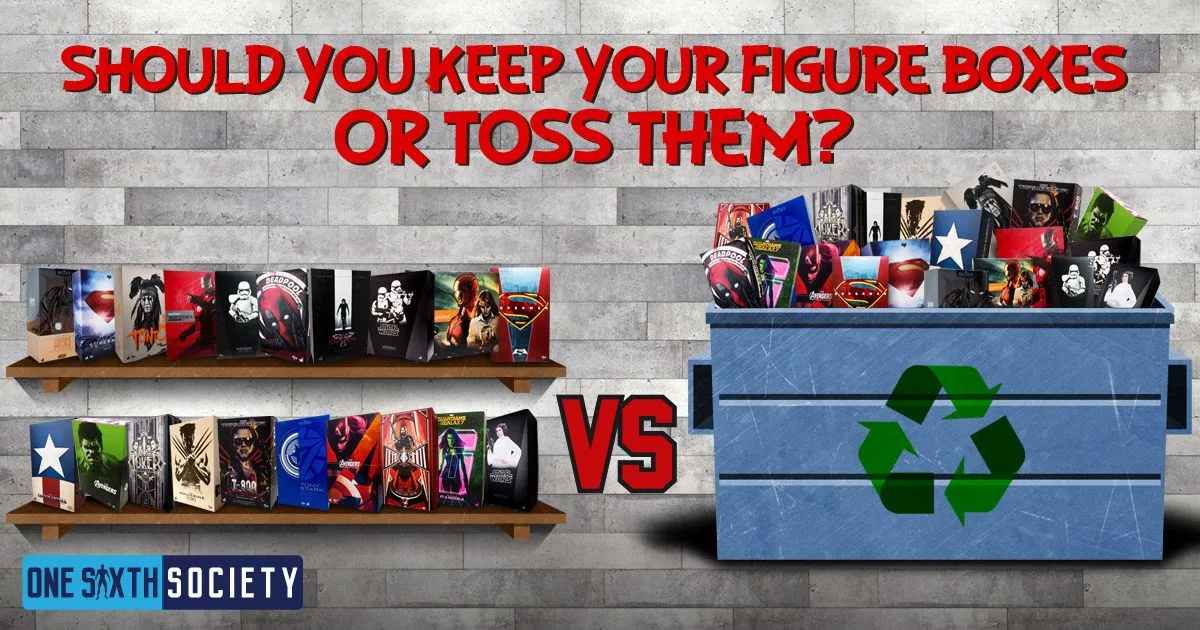
Keep Hot Toys figure boxes when they still serve a purpose: protecting a figure during a move, storing its accessories or keeping a collectible complete for a future sale. If empty packaging is taking over your room, you do not have to keep every box in the same way.
For Hot Toys and other detailed figures, the decision involves more than cardboard. The fitted tray, protective pieces, art box and outer shipping carton do different jobs. Sorting those parts separately makes it easier to reclaim space without losing something you may need.
Keep the packaging you are likely to use

The strongest reason to keep a complete box is a realistic plan to use it. A fitted tray gives you a known place for the figure, hands and accessories when packing it away. It can also help you check what belongs in a set. Photograph the arrangement before removing everything, especially when small parts are easy to overlook.
If you expect to sell a figure, keeping its original packaging preserves the option to offer it as boxed and complete. Buyers differ in what they value; a box is not a guarantee of a higher sale price. Describe the condition of the figure and packaging separately, including missing inserts or damage.
Some boxes are worth keeping simply because you enjoy the artwork. A small selection displayed deliberately can be part of the collection, rather than a pile that competes with it. Our display-case guide can help you plan around the figures and accessories you actually want to see.
Separate the art box, fitted tray and outer carton
- Art box: the printed presentation packaging. Keep it intact if completeness or display matters to you.
- Fitted tray: the shaped insert that holds the figure and accessories. Flattening or discarding it removes that original packing arrangement.
- Outer shipping carton: the protective cardboard around the art box. It may be easier to flatten where its construction allows, but it is distinct from the presentation box.
- Sleeves and artwork: some flat pieces can be kept in a folder even if you no longer have room for a complete box.
Check every compartment before you decide. Spare hands, instructions, stands and tiny accessories can remain hidden in an apparently empty tray. Label any parts you move to separate storage with the figure’s name and model number.
Before packing a figure back into its box
Work on one figure at a time so parts from similar releases do not get mixed together. Use your unboxing photos or the supplied packing instructions to check the layout. Place loose accessories in their own slots before closing the tray.
Check the figure’s pose against the insert. A hand, cape or weapon added for display may stop it from fitting. Do not force the lid down on a part that sticks up. Remove the display accessory where the instructions allow, and check that nothing sits across the tray’s edge.
Original packaging is useful, but an old or damaged tray may no longer hold the contents securely. Inspect it before a move. For shipping, the art box needs suitable outer protection; a familiar brown shipper with crushed corners may need replacing.
A simple box inventory
Record the figure’s name, product code and storage location in a note on your phone. Add a photo of the packed tray and list anything stored elsewhere. This makes it easier to find a missing stand or match an empty box to the right edition without opening every carton.
Let go of boxes that no longer earn their space
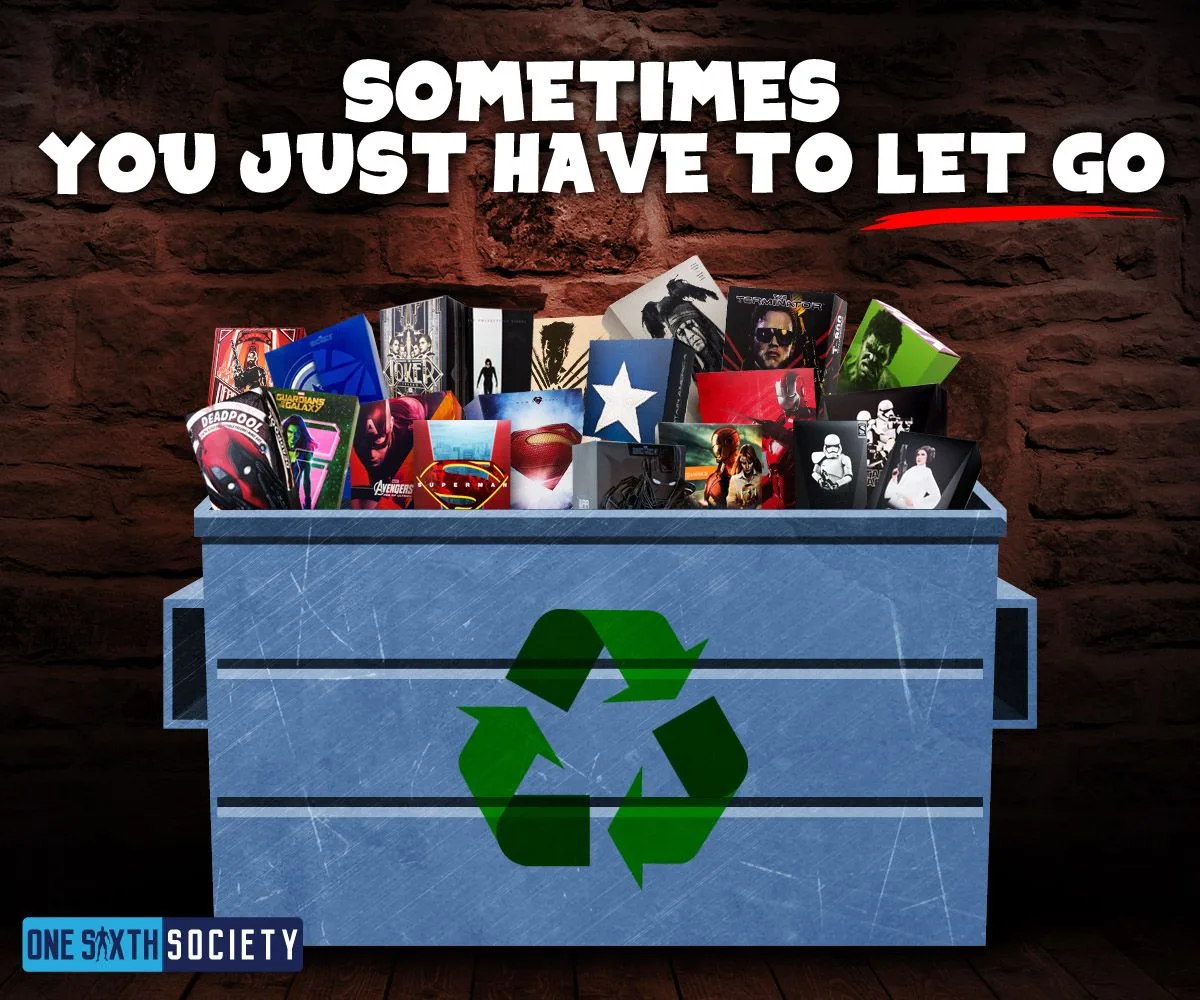
If you rarely sell figures, have no move planned and do not enjoy displaying the packaging, you may not need every empty box. Keep complete packaging for delicate pieces and save selected artwork from boxes you no longer need.
Flattening an art box can crease it and may not be reversible. Keep complete packaging for figures that need it most, then decide separately whether to retain or discard the rest. If you recycle packaging, separate materials according to your local collection rules; cardboard, foam and molded plastic are not always accepted together.
Give packaging a defined storage limit
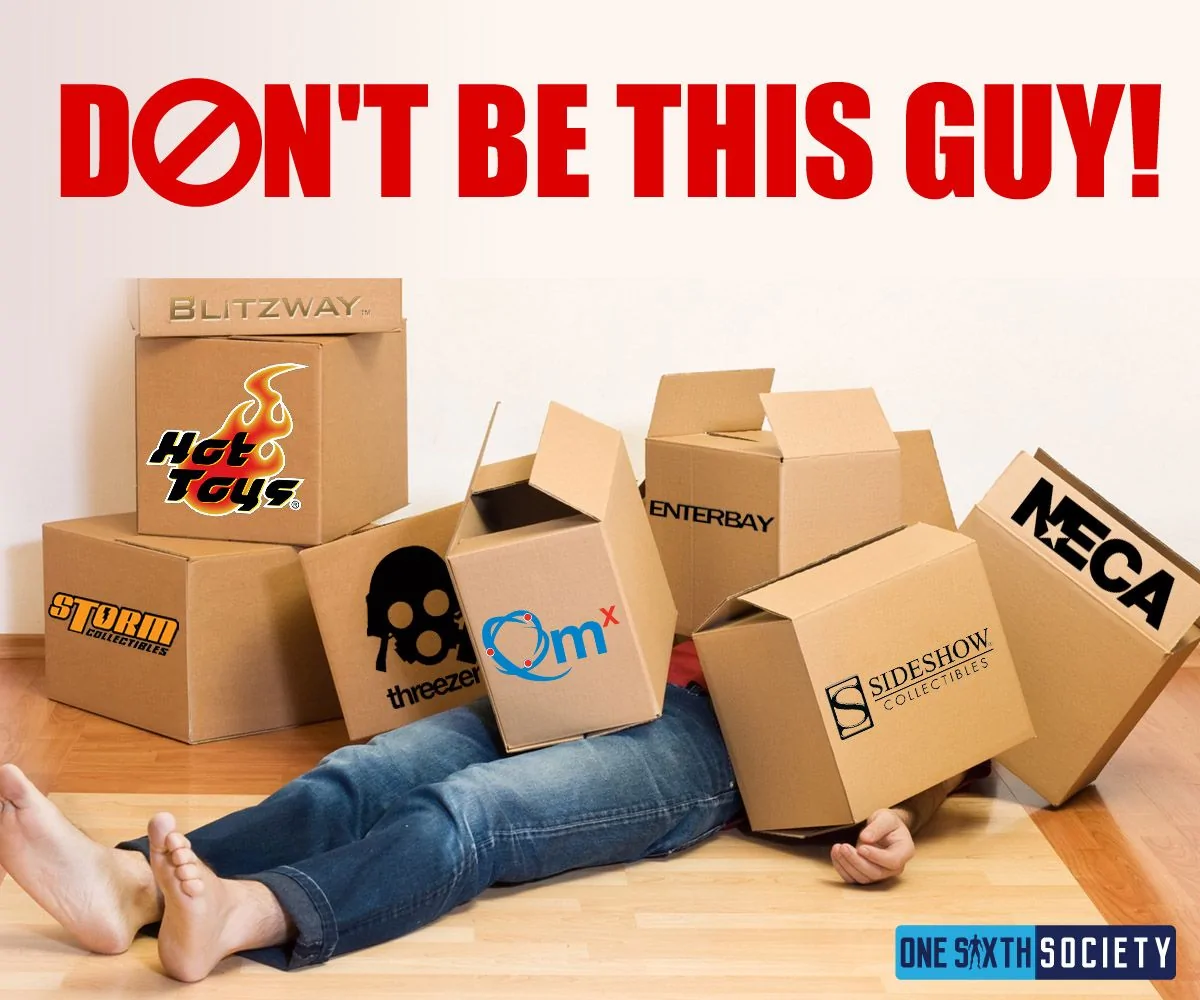
Choose a shelf, cupboard or other dry storage area and organize boxes by figure or product line. Keep a simple list of where accessories and trays are stored. Avoid letting stacks block access to your display or become difficult to move safely.
Revisit the selection when you move, sell a figure or change a display. Keep a box because it is useful or meaningful to you, not because an ever-growing pile has become the default. For the figures themselves, see our action-figure care guide and browse the Hot Toys page for related reviews and collecting articles.
For another view of the space tradeoff, read how Hong Kong collectors manage limited room.