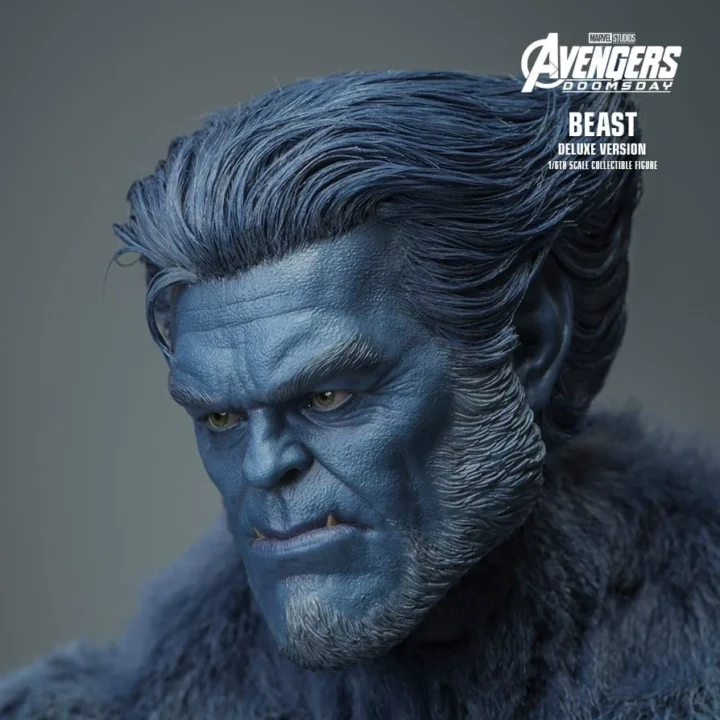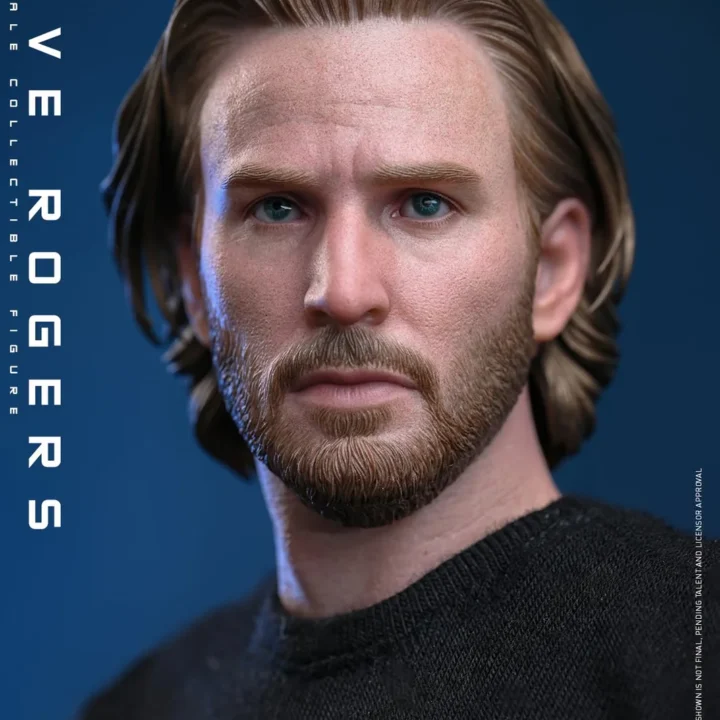
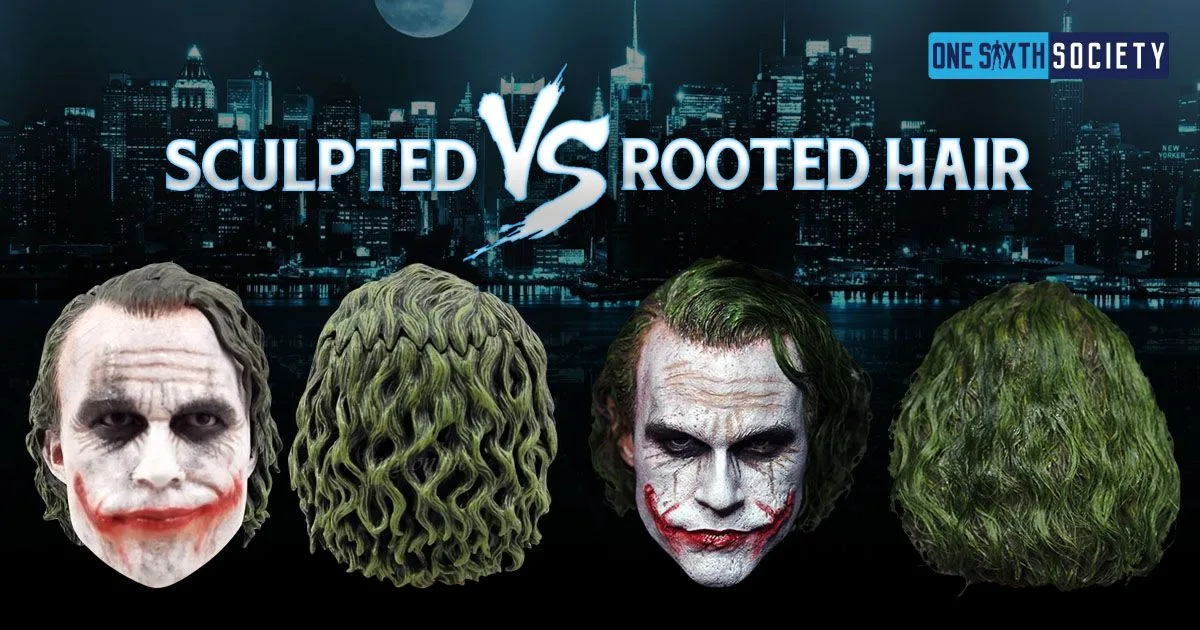
Sculpted versus rooted hair is a choice about likeness, texture and how much styling you want to do. A convincing sculpted hairstyle can complete a figure straight out of the box. Carefully applied fibers can give a head sculpt a softer outline and individual strands that catch the light. Either approach can work beautifully when it suits the character.
These examples come from custom artists who shared their work with One Sixth Society. They show how hair changes a portrait’s shape and texture.
What is the difference?
Sculpted hair is modeled as a solid form, either as part of the head or as a separate fitted piece, and painted to suggest strands, color and depth. Its shape stays fixed when you move the figure.
Rooted hair uses individual fibers to create the hairstyle. Collectors also use the term broadly for applied-hair work, although the precise attachment method and material can vary. If those details matter to a commission or repair, ask the maker how the hair is secured rather than relying on the label alone.
Sculpted hair: a consistent shape with less styling
A well-sculpted hairstyle keeps its silhouette and parting without rearranging loose strands. That makes it appealing for collectors who change poses frequently or prefer a display that needs little attention beyond careful dusting.
The tradeoff is rigidity. Long locks may meet a collar or shoulder when the head turns, and the sculpt cannot fall differently with the pose. Paint and sculpting must also convey all of the texture: heavy grooves, an oversized edge or an unsuitable sheen can draw attention away from the face.
Rooted hair: texture and movement at miniature scale
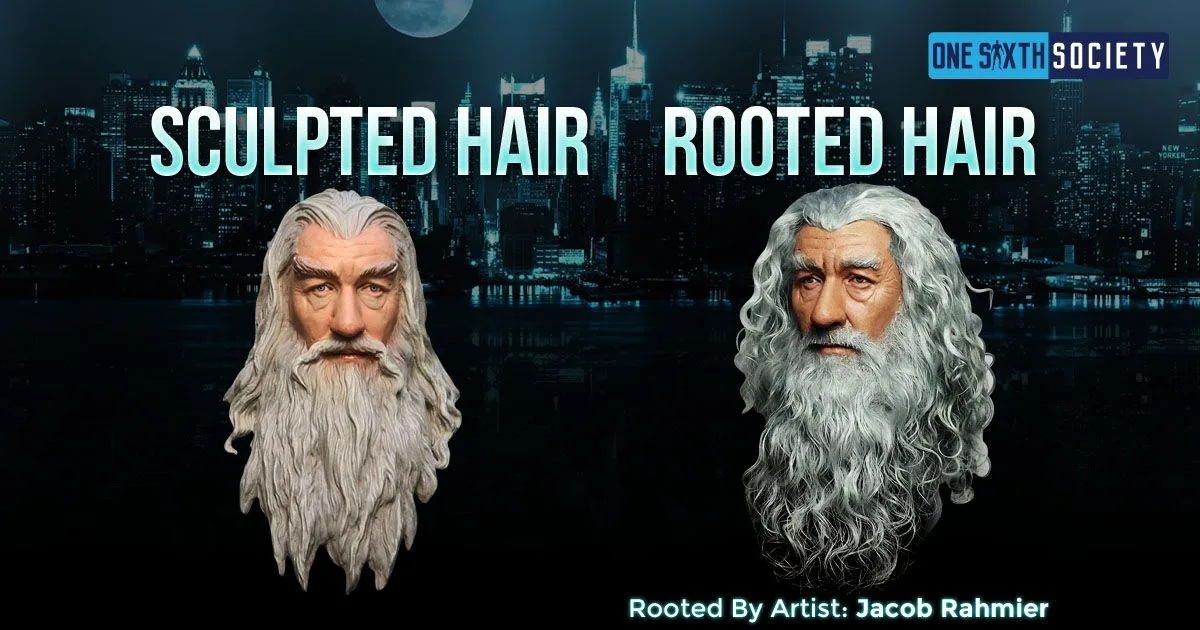
Jacob Rahmier’s Gandalf example shows how applied hair and a beard can soften the outline of a head sculpt. Fine strands, controlled volume and a convincing hairline matter together; adding more hair alone does not guarantee a closer likeness.
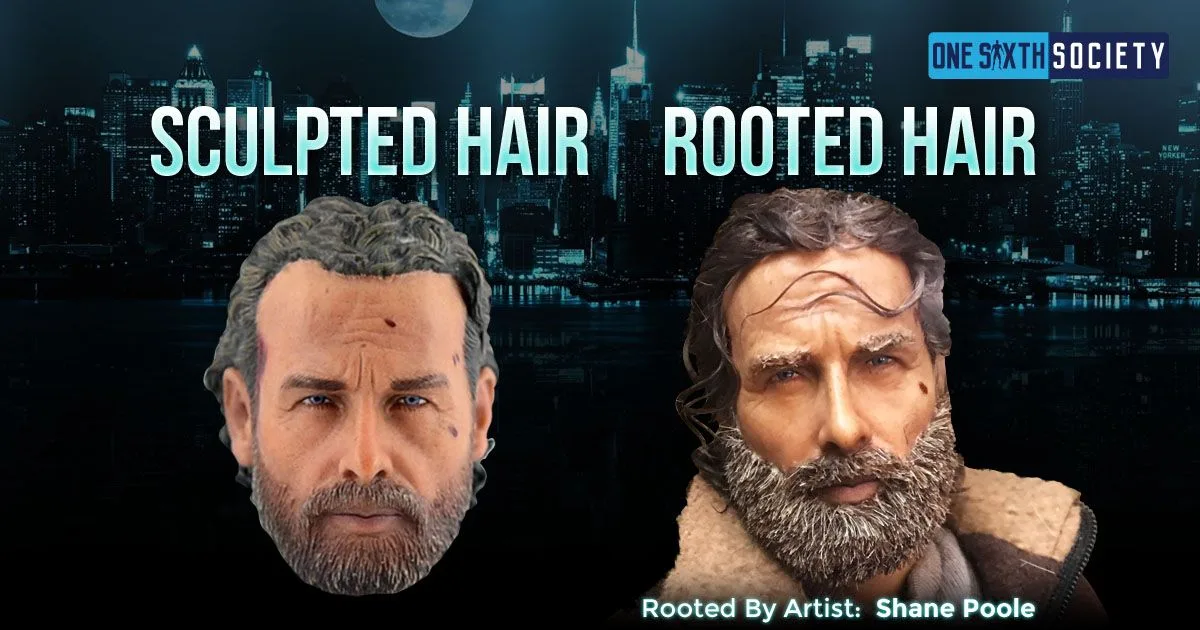
Shane Poole’s Rick Grimes comparison shows the uneven texture that individual hair and beard fibers add around the face.
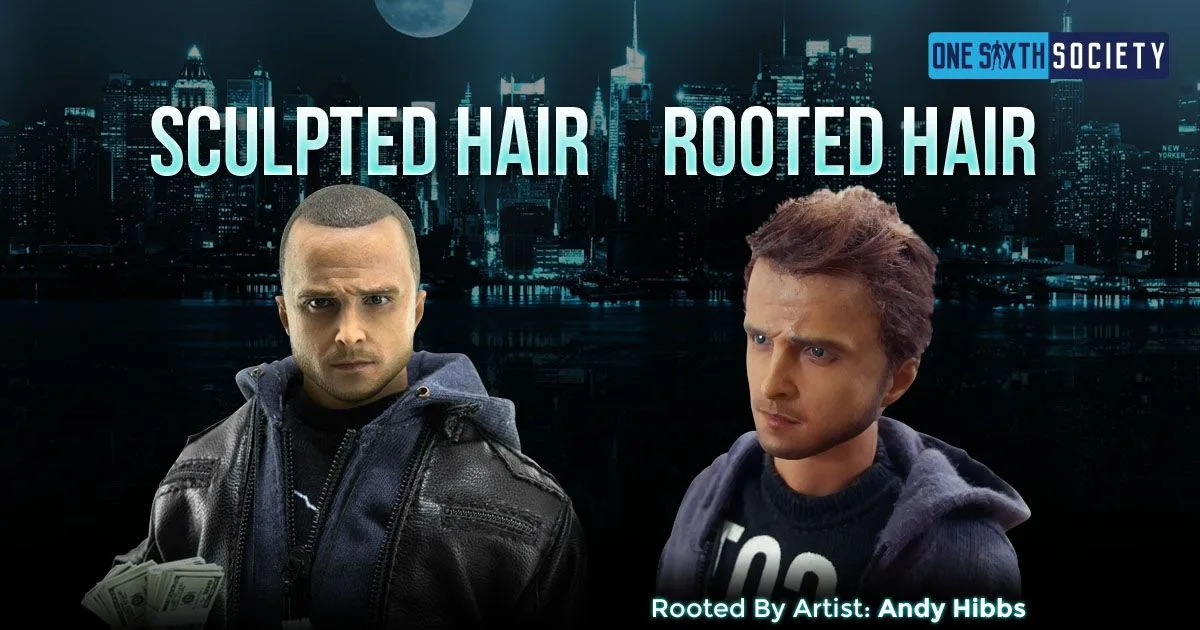
Andy Hibbs’s Jesse Pinkman example demonstrates how a different hairstyle can change the character’s overall impression. The sculpted and rooted versions represent different looks, making the intended screen appearance an essential part of the choice.
One Sixth Society thanks the artists who allowed their work to appear in the original comparison, including Jacob Rahmier, Thomas Terbanc, Andy Hibbs and Shane Poole.
Styling and care deserve consideration
Loose fibers can shift during handling or arrive compressed by packaging. Before adjusting them, check the maker’s instructions for the specific hair material and attachment. Human hair products, heat and water are not automatically suitable for miniature fibers, adhesives or nearby paint.
Avoid pulling at a knot or treating the hair like a full-size wig. If a custom hairstyle needs significant repair, ask the artist or a specialist before experimenting. Sculpted hair has different care needs: raised tips, paint and thin strands can still be damaged by rough handling.
Which suits your collection?
- Start with the character: compare the hairline, length, parting and outline with the look you want to display.
- Check the actual version: distinguish custom work and prototypes from photographs of the production release you are considering.
- Think about handling: decide how comfortable you are with arranging fibers whenever you change a pose.
- Compare the whole head: strong hair work cannot by itself correct a face sculpt, paint application or proportions that you dislike.
- Clarify commission terms: ask what work is included, whether the original hair must be removed and what care the finished piece needs.
Choose the finish that gives you the character likeness and daily ownership experience you prefer. For related craftsmanship, explore our custom sixth scale figure artists guide and custom cape makers profile. Browse the Hot Toys page for associated figures and reviews.
For examples of how portrait work changes a figure, see our sixth-scale head-sculpt selections and interview with sculptor K.A. Kim.
Compare the Actual Edition’s Portrait
The Ellen Ripley Standard, Deluxe and Artisan editions show how portrait treatments can differ within one release. The comparison includes both the head options and each edition’s display accessories.