Hot Toys figures are expensive because the finished collectible combines several specialist jobs: portrait sculpting, miniature painting, costume making, mechanical design, licensed likenesses and repeatable manufacturing. The price also has to support packaging, distribution and the business selling it. Overseas delivery and import charges can add another bill before the figure reaches your shelf.
That explains why a Hot Toys figure costs more than its raw materials. It does not prove that every release is good value. A beautiful portrait can come with a frustrating body. An impressive Deluxe base can be useless in your cabinet. And an aftermarket seller asking twice the original price has not added twice as much craftsmanship.
The useful question is what you are actually getting for the money. To answer it, we followed the work from the first character reference to the shipping carton, using interviews with Hot Toys artists, the manufacturer's product information, a packaging designer's portfolio and industry sources. Hot Toys has not supplied us with its factory invoices or private contracts. Documented product facts and illustrative calculations are identified separately throughout.
All dollar amounts in this article, its tables and charts are in US dollars (USD).
Follow the Figure from Workshop to Shelf
| Part of the purchase | What the collector receives | What needs a closer look |
|---|---|---|
| Portrait and paint | A recognizable character with convincing miniature detail | Likeness in ordinary light, eye alignment and the finish on shipped figures |
| Body and costume | Proportions, movement, layered clothing or armor | Whether the outfit allows the poses shown in the advertising |
| Accessories and electronics | Alternate looks, effects, lights and display options | Which parts you will use, how they attach and what powers them |
| License and approvals | An officially authorized version of a character or performance | The exact film, costume, actor and edition being represented |
| Packaging and delivery | Protection for the figure and its small parts | Carton size, import charges and the seller's damage policy |
| Retail service | Ordering, fulfillment and help when something is wrong | Who handles defects, return costs and the terms of a preorder |
Some of this work is paid for before production begins. Other expenses repeat with every unit sold. Both matter, along with the price collectors are willing to pay.
Sculpting: Why Getting the Face Right Takes More Than a Scan
A Tony Stark head can have sharp pores, detailed hair and perfectly straight eyes and still fail to look like Robert Downey Jr. Surface detail and likeness are different problems. The position of the eyes, the shape of the mouth, the jaw and the relationship between those features have to work together.
Hot Toys' artists have described that problem themselves. In Hypebeast's 2015 interview with J.C. Hong, Kojun and Yulli, Hong discussed studying film and photographs to turn two-dimensional references into a convincing three-dimensional object. Yulli acknowledged that her own impression of a character could unintentionally make a sculpt more idealized than the person. Those comments explain why a recognizable face takes judgment as well as fine tools. Read the artists' interview.
For collectors, this is the difference between a head that photographs well from one angle and a portrait that keeps the likeness when you turn it. Look at the profile, the mouth from slightly below and the eyes from a normal viewing distance. A dramatic close-up is useful, but it is only one view.
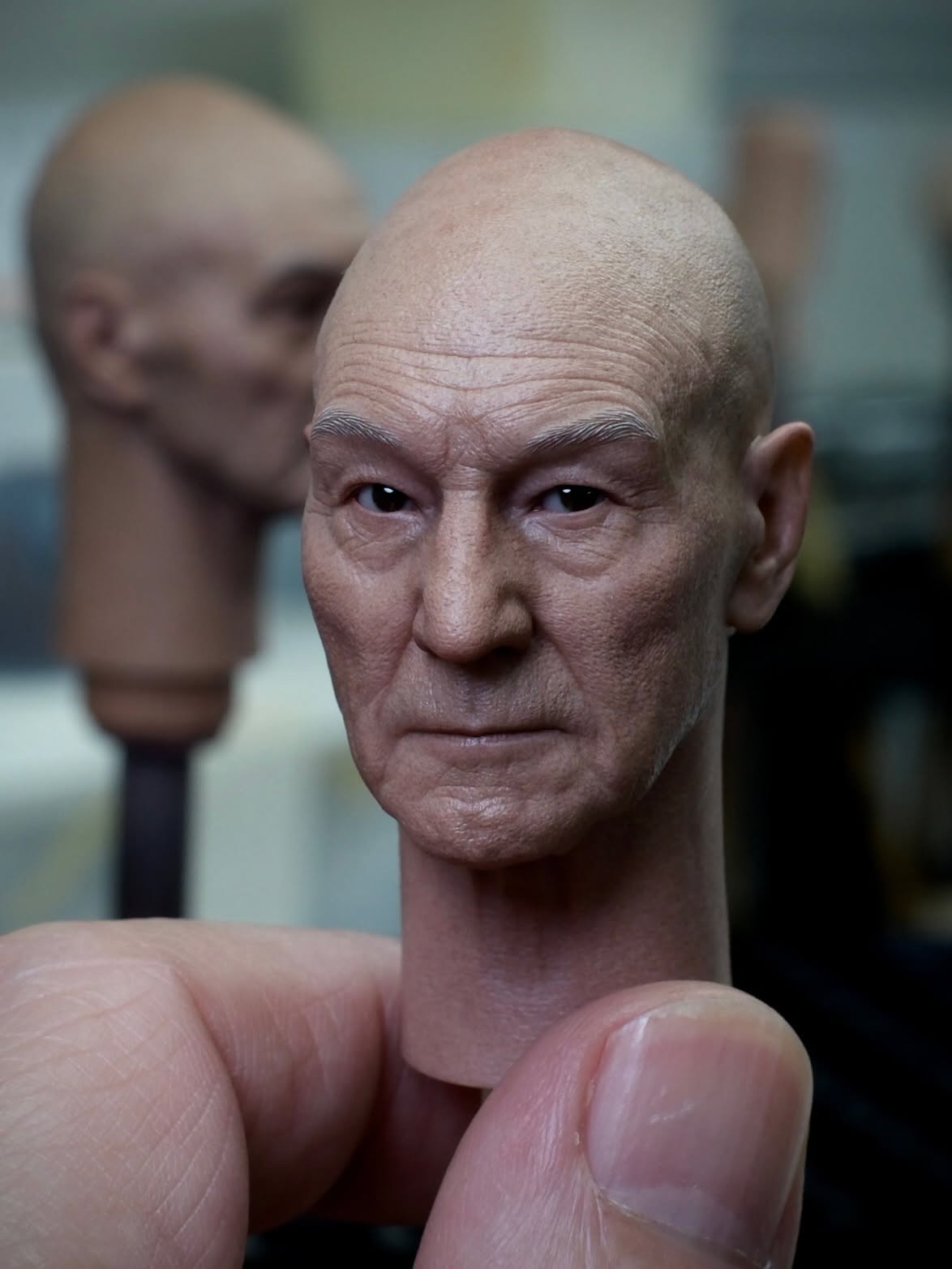
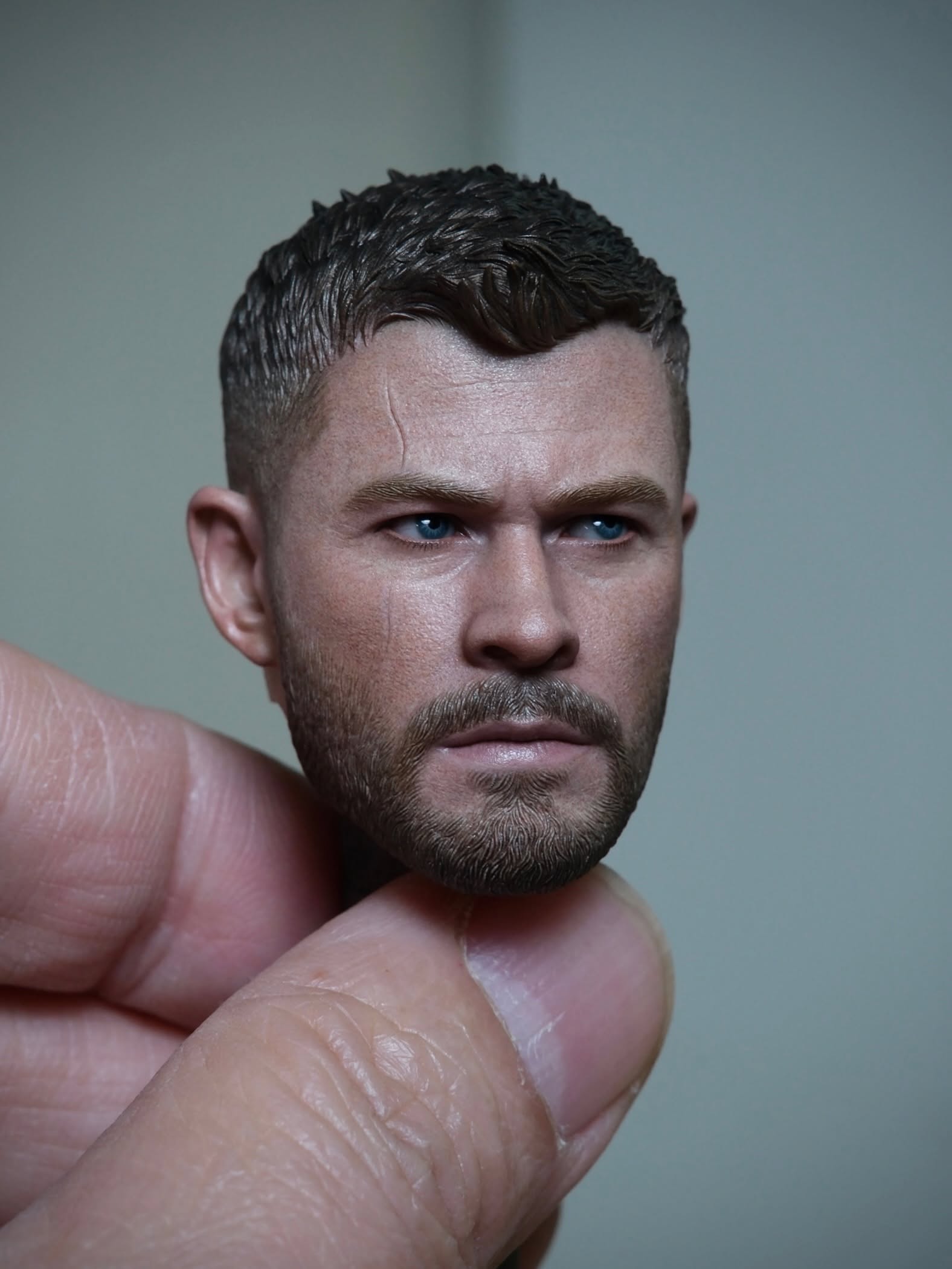
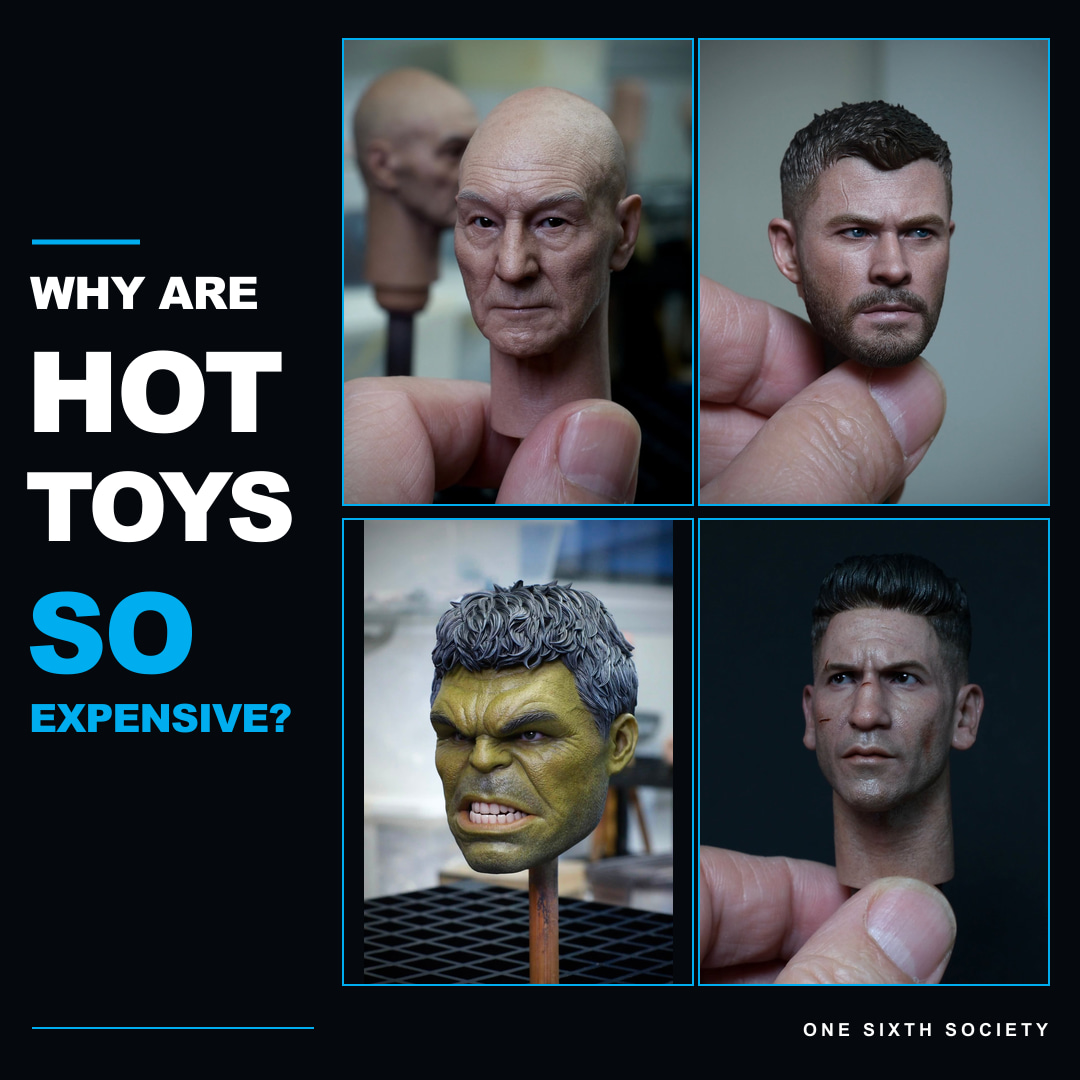
The photographs above let you inspect wrinkles, beard texture, lips and painted eyes without hiding them behind a full-body pose. Pay attention to how those details work together as a face.
Reference, Expression and Approval Come Before Production
In a 2017 interview with Lucasfilm, Hot Toys founder Howard Chan outlined the company's Star Wars process: research the character, decide on the expression, hair, outfit and accessories, then submit the concept to Lucasfilm. Prototype work follows approval, bringing together the head, articulated body, tailored outfit and equipment. Howard Chan's account on StarWars.com is useful evidence of the work behind a release, although it is a historical account rather than a current timetable for every license.
Choosing the expression matters to the figure you eventually own. A shouting face might be excellent for an attack pose and awkward beside a row of neutral portraits. A second head adds more than another accessory count: it can make a different scene possible. Check the expressions before deciding that two heads automatically mean better value than one.
Where Scanning and Digital Tools Fit
A scan or digital file still leaves choices about expression, hairstyle and the moment in the film being represented. Hot Toys' public interviews document the artists' decisions, but do not provide a current, release-by-release account of its scanning and digital workflow.
For a collector, the finished face is the test. Does it capture the actor and the character? Do the fine details remain convincing at sixth scale? Does the boxed figure look as good as the head used to sell it?
Painting: A Good Sculpt Still Needs a Convincing Finish
Look at the two portraits below. Hulk's face has green skin, hair and exposed teeth to distinguish. Punisher's face has stubble and marks that need to read as part of the skin rather than thick decoration sitting on top of it. The sculpt supplies shape; the visible colors and finishes determine how those shapes read.
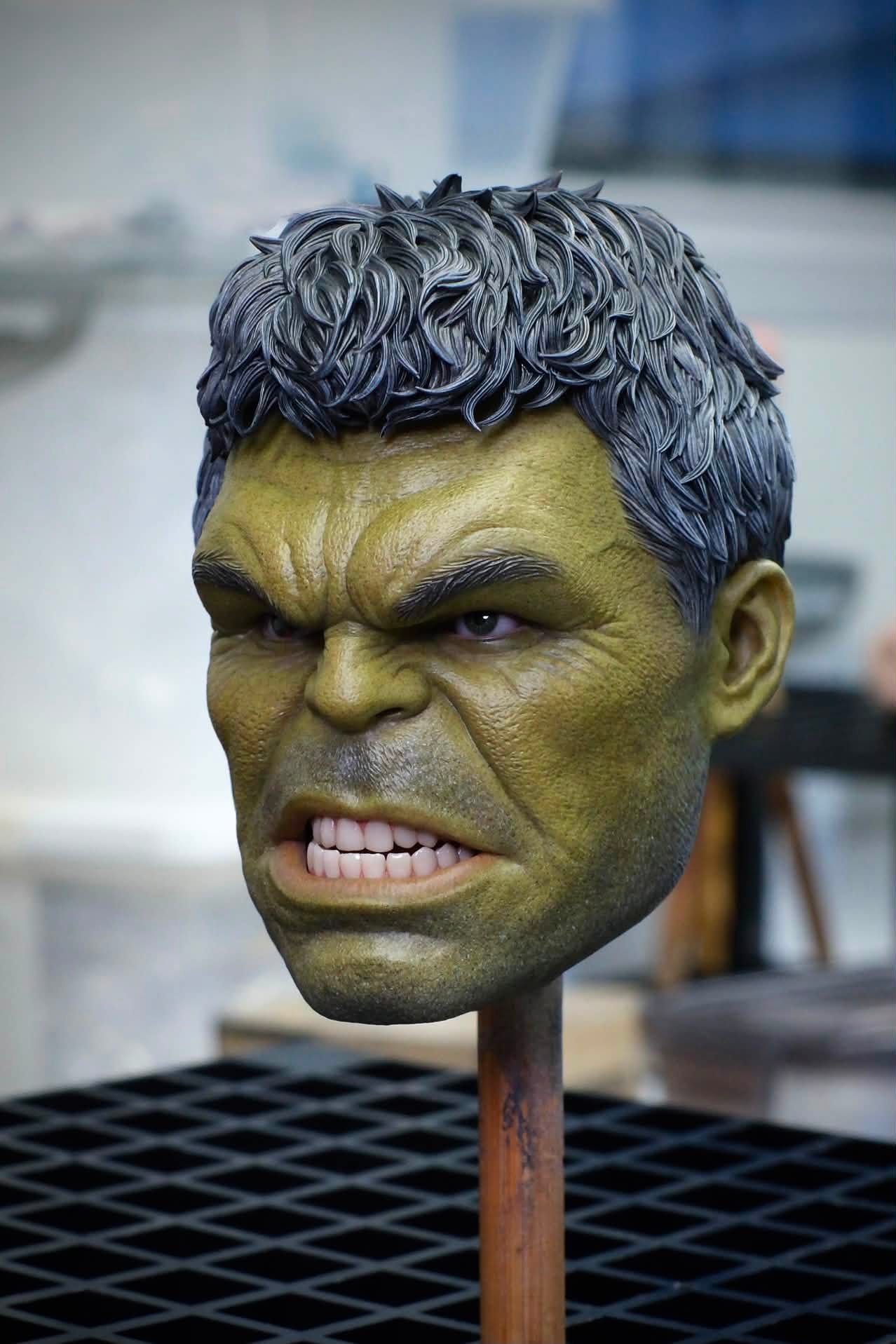
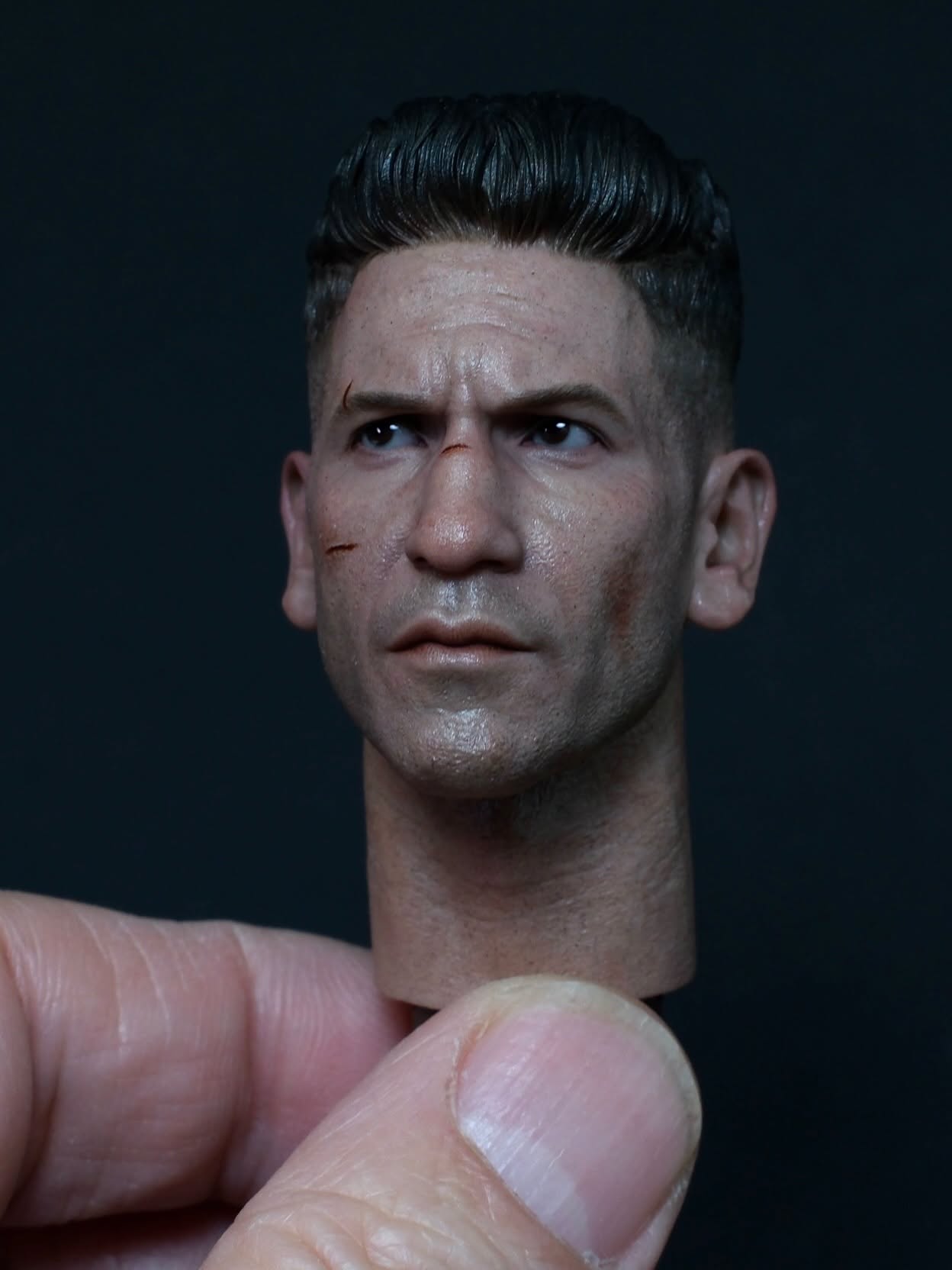
Hot Toys Japan specifically describes the Tony Stark portrait supplied with its Iron Man Mark III 2.0 bonus-accessory edition as individually hand painted. That establishes hand work on the product; it does not mean the named prototype painter personally paints every retail head. The same listing also describes the armor's finish and interchangeable battle-damaged panels. Manufacturer's Mark III 2.0 specifications.
Shaping the Part and Decorating It Are Different Operations
Industrial finishing can involve several methods. Protolabs lists painting, pad printing and UV printing as separate services: pad printing transfers a flat design onto a three-dimensional part, while painting specifications identify the color, finish and areas that need masking. That illustrates why a molded shape and its decoration are separate jobs. Examples of industrial finishing operations.
Hot Toys' hand-painted portrait description confirms hand work on that head; it does not identify the technique used for every emblem, armor panel or accessory. Collectors can judge the result without assuming the entire figure was decorated with the same tool.
What Collectors Should Look for in the Paint
Instead of judging a portrait only by how much texture it has, look for clean boundaries and believable transitions. Does the eyebrow look separate from the forehead? Do the lips suit the character, or look unusually heavy? Are the eyes looking in the same direction? Does the beard read as facial hair at normal distance?
Armor deserves the same attention. A scratch should make sense as damage to that surface. An interchangeable damaged panel should match the surrounding suit well enough to look intentional. A shiny finish may suit Iron Man and look wrong on a cloth sleeve. There is no single finish that makes every figure more realistic.
Hot Toys does not publish a standard layer count or painting time for its retail heads. The useful comparison is the finish on the figure you can actually buy.
The Prototype and the Boxed Figure Are Different Checks
An artist's finished master shows the intended appearance. A production release has to deliver that appearance repeatedly. Hot Toys Japan's support policy acknowledges small variations in paint, fine marks and sewing from mass production, while distinguishing them from defects. Its published support terms apply to its Japanese distribution, not automatically to an overseas seller.
That is why collector photos of the final release are so valuable. Compare several examples in ordinary lighting before deciding that one unusually good or bad photograph represents the entire run. Equally, “hand painted” is not a reason to accept a visibly defective eye or an important missing paint application without contacting the seller.
Engineering: The Body Has to Work Under the Costume
Articulation counts are easy to print on a product page. Useful movement is harder to judge. A joint can exist beneath armor yet have little room to move. A shoulder may lift on the bare body but pull the finished shirt badly. A figure's proportions, joint placement and outfit need to work as a complete assembly.
The manufacturer's listing for the game-based Spider-Man Advanced Suit 2.0, VGM54, gives a concrete example: a newly developed body, an embossed suit, four articulated mechanical pincers and magnetically attached web wings. These are different systems sharing a single figure. Hot Toys Japan's Spider-Man specifications show how much has to fit and operate around the suit.
From a collector's perspective, the useful engineering questions are straightforward. Do the mechanical arms hold the positions you want? Can you reach the attachment points without fighting the costume? Does the stand support the intended pose? Those questions tell you more than adding all the moving parts together.
Diecast, Silicone and Plastic Solve Different Problems
“Diecast” does not mean every component is metal. A figure can combine metal armor sections with plastic mechanisms and other materials. Extra weight may feel satisfying, but weight alone does not tell you how durable a hinge, connector or paint finish will be.
Hot Toys' Age of Ultron Artisan Thor illustrates a different construction choice. The official description specifies interchangeable exposed silicone arms and armored vinyl arms, with internal metal structures. It also identifies rooted wool hair and a wired cape that attaches magnetically. Manufacturer's Artisan Thor details. The material choice follows the appearance and movement being attempted; it is not a universal ranking with metal at the top and plastic at the bottom.
For a bare arm, collectors may value a smooth elbow without an obvious joint. For an armored character, they may prefer parts that move independently. Both approaches involve compromises. A seamless appearance does not establish unlimited bending, and a heavy figure still needs a suitable support.
Lights, Eye Controls and Access to the Mechanism
A light-up figure includes more than the light you see: there must be a power arrangement and some way for the user to reach or connect it. Similarly, adjustable eyes need a control you can actually use without damaging the face or hair. Read the instructions for the specific figure rather than assuming that every release operates like the last one.
Before paying extra, decide whether you will use the feature. If the figure will stand in a closed cabinet with its lights off, a better portrait might matter more to you than additional illuminated parts. If you plan a lit display, the placement of switches, cables and power connections becomes part of the buying decision.
Costume Making: A Small Jacket Is Still a Garment
At sixth scale, the thickness of a seam, the size of a fastener and the stiffness of the fabric can become conspicuous. Simply making the outline of a jacket smaller does not guarantee that it hangs like the actor's jacket. Look at where the shoulder sits, how the collar folds and how much fabric gathers when an elbow bends.
A layered outfit also has to fit over an articulated body. If every layer adds bulk, the finished figure can lose the proportions that made the character recognizable. Conversely, a tight costume may look excellent in a standing pose while limiting movement. Neither issue is explained by a raw articulation number.
Howard Chan's Lucasfilm interview gives an unusual Hot Toys example beyond ordinary tailoring: Chewbacca's full-body fabric hair was built using different layers and shades with specialized tailoring. That is a different construction problem from a trooper's hard armor or a tailored human outfit. The same interview is linked in the sculpting section.
For a current collector comparison, our Professor X guide covers a character whose seated outfit and wheelchair determine much of the presentation. Our Thor Deluxe guide covers a very different package, including a large display base. Price per inch cannot meaningfully compare those purchases.
Manufacturing: Turning One Good Prototype into a Production Run
The master is only the beginning. A repeatable product needs parts that can be manufactured, finished and assembled consistently. For molded components, the tool used to form the part is itself a manufactured object. Its shape must allow the finished piece to come out without being trapped or damaged.
Protolabs' injection-molding guide explains why complex geometry, difficult-to-release shapes and demanding surface finishes increase tooling work. It also explains how the initial cost of a mold is spread over the parts produced from it. The process explanations below use general manufacturing sources; Hot Toys' factory tooling specifications are not public. How injection-mold tooling affects cost.
For Hot Toys, this helps explain why “it is only a small plastic part” is not a complete cost argument. A tiny but awkward accessory can need more development than its size suggests. However, the reverse matters too: sharing an already suitable component can avoid some new development. Reuse is not automatically bad if the reused part is correct for the character.
What Happens Inside an Injection Mold?
In a typical thermoplastic process, plastic is heated until it flows, pushed into the mold cavity, allowed to cool, then removed. The cavity defines the part's shape. The material must reach the small details and come out cleanly when the mold opens. Protolabs' process guide describes common problems including incomplete filling, shrinkage and sunken areas caused by uneven cooling. How plastic parts are formed and checked.
That makes the geometry important. A piece can look straightforward in a drawing yet need changes so it fills properly or releases from the tool. Material thickness and the angle of surfaces matter alongside the visible design. These are general molding principles, rather than a claim that every Hot Toys component uses this process.
For a figure with many fitted pieces, an attractive surface is only half the job. Armor must clear the neighboring panel. An accessory has to fit its hand or socket. After decoration, the parts still need enough clearance to work together. A beautiful prototype does not remove the need to check the assembled production figure.
Why Production Quantity Matters
Consider the same fixed development expense spread across different quantities. Double the number of saleable units and that fixed expense per unit halves. That arithmetic does not halve the entire figure's cost: manufacturing, finishing, packaging and other repeating expenses still remain.
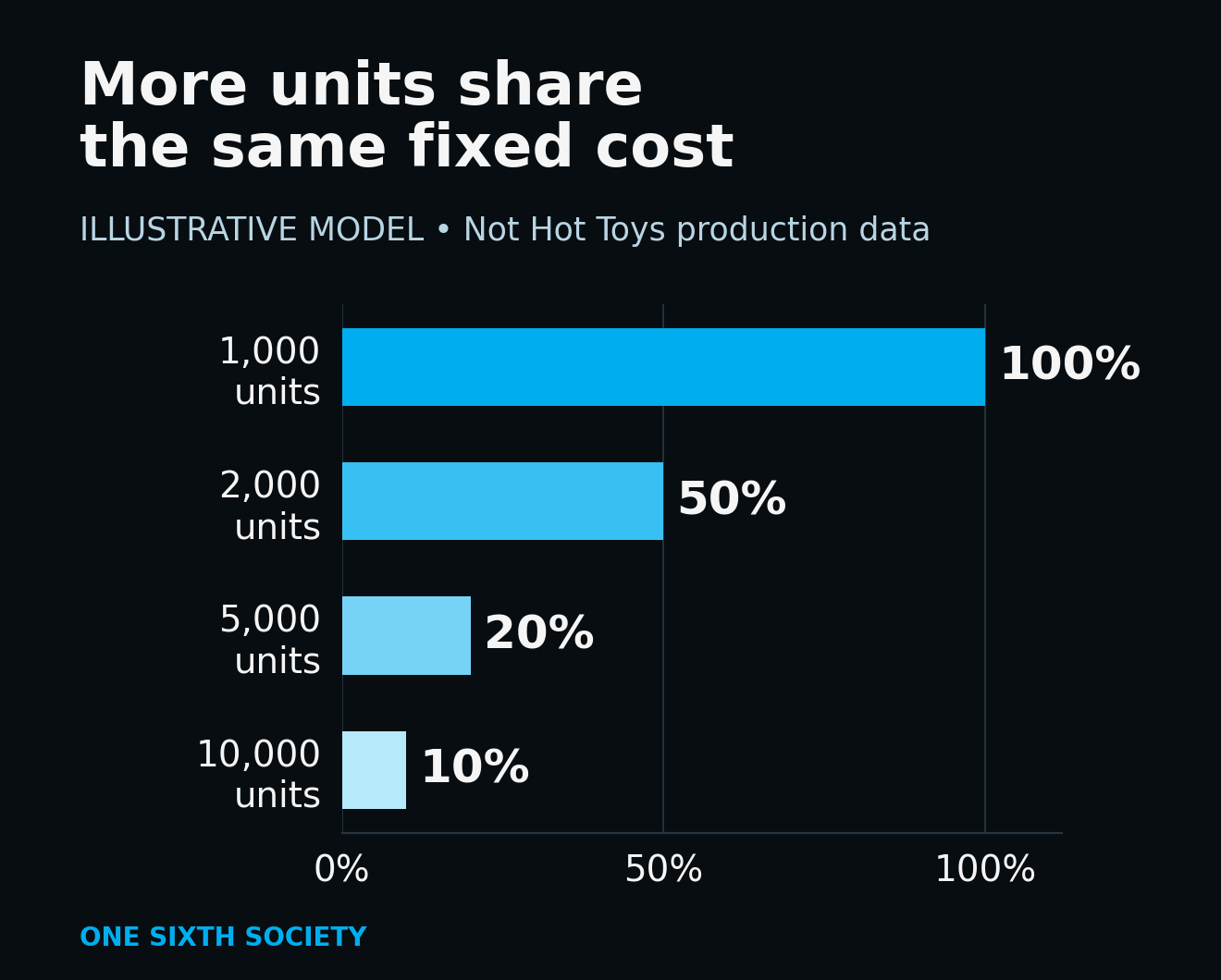
| Illustrative production quantity | Share of the same fixed cost per unit |
|---|---|
| 1,000 units | 100% of the baseline |
| 2,000 units | 50% of the baseline |
| 5,000 units | 20% of the baseline |
| 10,000 units | 10% of the baseline |
This model holds the fixed expense constant and assumes all units can be sold. It illustrates the arithmetic; these are not disclosed Hot Toys production quantities. Per-unit labor, materials and packaging still have to be paid for.
Assembly and Quality Control Are Separate Jobs
Even when individual pieces look right, they still have to fit together. A connector can be hidden inside a flawless-looking part and still spoil the assembly. From a collector's side, the checks include connector fit, paint rubbing, costume alignment, missing accessories and the operation of any electronics.
Collectors encounter the result at unboxing. Take inventory before throwing out protective material. Check the faces and fragile accessories, then follow the instructions when assembling or posing. Identifying a problem promptly gives you a clearer record than discovering it after months of storage or after modifying the figure.
Packaging: The Art Box, Inner Trays and Brown Shipper
There is more going on here than printing a character's face on cardboard. The art box presents the release. The inner packaging separates and restrains its parts. The outside carton protects the package through handling. Individual Hot Toys releases use different arrangements; none of the following is a claim that every box has the same board, foam or plastic.
How the Cardboard Structure Is Made
Corrugated board has a fluted middle layer joined to flat liner sheets. Converting equipment can print, cut, score, fold and glue the board into a box. A printed sheet can also be laminated onto corrugated material to combine detailed graphics with the supporting board. Packaging Source's manufacturing booklet explains these processes and the difference between cutting the box shape and creating its folds. Corrugated-box manufacturing guide, pages 8–10.
Those are established packaging methods, not a factory specification for your particular Hot Toys shipper. The practical point is that material, structure and artwork are separate decisions. A carton designed only to look attractive is not necessarily the best way to protect a heavy collectible and its delicate extras.
The Trays Are Designed Around the Contents
A shaped plastic tray is not simply a flat sheet dropped into the box. Thermoforming heats a plastic sheet, forms it around a tool, then cools and trims it. Vacuum forming is one way of drawing that sheet against the shape. Formlabs documents the process and its use in packaging. How shaped plastic packaging is manufactured.
That explains a common packaging method, not the resin or process used in every Hot Toys tray. What you can inspect directly is whether each cavity supports its item and keeps it away from neighboring parts. A spare portrait, a long weapon and a heavy base present different packing problems. Adding accessories can mean additional cavities, another tray layer or a larger box.
Artwork Is a Design Job of Its Own
Dixon Chan's portfolio identifies his packaging design for Hot Toys' Christopher Reeve Superman. The box takes the shape of Superman's shield, while a smaller folding component supports it for display. This is a documented example of the package doing something more deliberate than carrying a printed photograph. See the designer's Superman project.
Packaging Corporation of America describes graphic design, structural design and testing as distinct packaging capabilities. That division helps explain the work behind an art box: the image, the folded structure and the protection all need attention. How packaging designers divide that work.
Creating an effective box also means placing the title, character image, edition identification, legal notices and opening points where they work on a three-dimensional object. Artwork that looks good as a flat image still has to line up across folds and panels. Different shapes and opening arrangements need their own layouts. A sleeve, a hinged lid and a shaped display box give the designer different surfaces to work with.
The package has collector value too. It identifies the edition, keeps small parts organized and can make a future move much easier. Whether it deserves space beside the figure is a personal decision. A clever box is enjoyable, but it should not distract from a weak portrait inside it.
Protection Has to Survive More Than One Drop
Transport packaging has to deal with repeated handling, vibration, stacked loads and environmental conditions. ISTA's published testing guidance describes these different hazards. Those are general transport hazards; a particular Hot Toys box would need its own test evidence to claim certification. What transport-package testing evaluates.
There is also a difference between collectible condition and a seller's remedy. Hot Toys Japan treats packaging, including the shipping carton, as protection and excludes packaging damage from its replacement policy. Other sellers' terms may differ. If the condition of the art box matters to you, ask about extra outer packing and the policy before ordering.
Licensing Fees and Actor Royalties: What Is Actually Known?
Buying the materials does not buy the right to sell a Marvel, DC or Star Wars character. Licensing gives a business permission to use rights owned by someone else under an agreement. WIPO explains that compensation can take the form of a lump sum, recurring royalties or a combination. WIPO's explanation of licensing.
Disney's 2025 annual report describes merchandise royalties that are usually based on a percentage of wholesale or retail selling prices. It also discusses arrangements with minimum guarantees. This shows how a major licensor structures the business, but the report does not reveal the royalty rate for a Hot Toys figure. Disney annual report, merchandise licensing and revenue-recognition sections.
A minimum guarantee is a contractual floor for what the licensee owes, not proof of how many figures collectors will buy. When reviewing a supposed cost breakdown, ask whether its author has actually seen the relevant agreement. An industry percentage borrowed from an unrelated product is not a Hot Toys fact.
Does the Actor Get Paid for Every Figure?
The public product information does not disclose a universal per-figure actor royalty. Hot Toys Japan expressly identifies authorized actor likenesses on products such as Tony Stark and Joaquin Phoenix's Joker. That confirms the likeness has been cleared; it does not disclose who receives which payment or whether the actor receives a separate payment on every unit.
Character rights, an actor's recognizable likeness and an approval arrangement are related but different questions. The actor's underlying agreement may affect how those permissions and compensation are handled. Without the relevant contract, adding a studio royalty and a guessed actor royalty to every figure would be double-counting by assumption.
| Question | What the public evidence supports | What it does not establish |
|---|---|---|
| Is this an officially licensed character? | The manufacturer's licensing statements and product notices | The amount paid for this release |
| Is the actor's likeness authorized? | Product descriptions identifying cleared likeness rights | A standard actor payment per figure |
| Does approval involve creative work? | Hot Toys interviews describe submissions and feedback | A universal number of approval rounds |
| Can licensing involve royalties or guarantees? | WIPO guidance and Disney's public reporting | Hot Toys' private percentages or minimum commitments |
Approvals can also affect the work without changing the physical bill of materials. Revising a face, outfit or approved presentation takes time even if the finished box contains the same number of objects. The object count alone misses that work.
Standard, Deluxe and Artisan: What Does the Extra Money Buy?
Edition names are not enough. Compare the actual inventory. A Deluxe release might add a substantial diorama; a Special Edition might add a bonus item. An Artisan release may change how the hair is made. The labels do not guarantee the same pattern across every character.
Hot Toys Japan's July 2024 announcement of Joaquin Phoenix's Joker offers a useful comparison. Converted to US dollars at the exchange rate on July 26, 2024, its tax-inclusive Japanese list prices were approximately $403 for the regular version and $487 for the Artisan version. That is about $84 more, or 21%. The stated difference was sculpted hair versus implanted wool hair, with the other specifications shared. Manufacturer's Joker announcement.
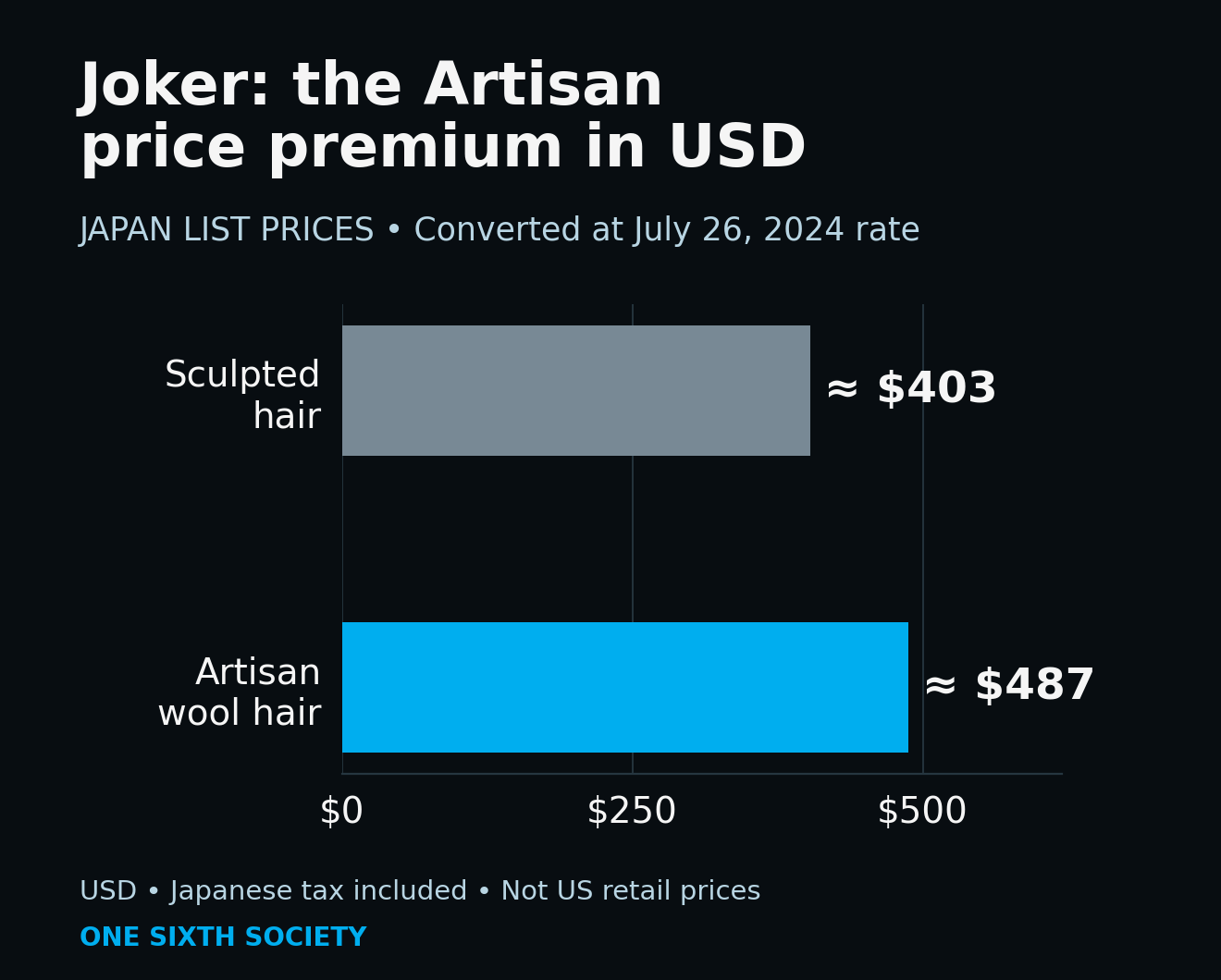
These are historical Japanese prices converted to USD, not US retail prices or current offers. We used the Federal Reserve's July 26, 2024 exchange rate and rounded to the nearest dollar. The $84 difference is the retail premium, not a disclosed manufacturing cost for the hair. It can reflect both the extra work and Hot Toys' pricing decision.
Rooted hair gives collectors a different appearance from sculpted strands. Whether you prefer it depends on the character and the finished execution. Compare the hairline, volume and styling on delivered examples. Paying more for the hair treatment makes little sense if you prefer the shape and simplicity of the sculpted version.
For a Deluxe base, make an equally direct comparison: what is the extra purchase price, where will the base go, and will you actually use it? Include any additional delivery charge. A large display piece can affect the shipping bill as well as the figure price.
Distributor and Retailer Markups: The Difference Is Not All Profit
There can be several commercial steps between a finished figure and a collector: manufacturer, distributor or importer, retailer, then the buyer. Some businesses perform more than one of those roles. The public price alone does not tell you which company carries each expense or the discount on its wholesale invoice.
A distributor may organize imports, store inventory and supply shops. A retailer handles individual orders, payment processing, fulfillment and customer service. Storage, staff, damaged stock, returns and unsold inventory are real business considerations. Their exact allocation within the Hot Toys distribution network is not publicly disclosed in the sources reviewed here.
The important distinction is gross margin versus net profit. The gap between purchase cost and selling price still has to cover expenses. Shopify's retail-pricing guidance explains the basic wholesale-to-retail relationship; it does not establish a Hot Toys dealer discount. Wholesale and retail pricing explained.
Markup and Margin Use Different Denominators
Imagine a shop pays $200 USD for an item and sells it for $300, before sales tax. The $100 difference is a 50% markup on the $200 cost, but a 33.3% gross margin on the $300 selling price. It is not $100 of take-home profit.
| Illustrative transaction | Calculation (USD amounts) | Result |
|---|---|---|
| Purchase cost | Assumed wholesale cost | $200 |
| Selling price | Assumed retail price | $300 |
| Gross profit before other expenses | $300 minus $200 | $100 |
| Markup on cost | $100 divided by $200 | 50% |
| Gross margin on sales | $100 divided by $300 | 33.3% |
All prices in this table are in USD. These are illustrative prices, not Hot Toys dealer figures. Separate distribution and retail markups also cannot be added as if they were percentages of the same starting amount: each applies to its own transaction.
For collectors, service is worth comparing alongside price. Who answers if the figure arrives with a broken part? Is stock genuinely in the seller's warehouse? Will a return need to cross an ocean? A higher price does not guarantee better service, but an overseas saving should be large enough to matter after those differences are understood.
Preorders, Storage and Money Tied Up in Stock
A preorder is a commitment to a future purchase, not proof that your particular unit is already made. Check the deposit, cancellation terms and payment schedule. Different sellers can offer different terms on the same Hot Toys release.
Unsold stock creates the opposite problem for a business: the money has been spent, but the item has not sold. A shelf full of large collectible boxes takes space and leaves that money unavailable for another order. This helps explain why discounts and clearance sales can occur without any change to the figure itself. It does not prove that a specific discounted release failed or that a retailer is in trouble.
Currency is another variable. A foreign listing can change in dollar terms even when its local price stays the same. Card-conversion charges and the exchange rate used when payment is taken can matter too. Compare the amount you will actually be charged, rather than converting an old screenshot and treating it as today's checkout price.
Overseas Shipping: You Pay for Space as Well as Weight
A collectible moving through an import supply chain may need inland transport, consolidation, international freight, customs clearance, warehouse handling and final delivery. Those are separate stages. Maersk describes these components in its explanation of less-than-container-load shipping, where smaller shipments share container capacity. The same stages help explain the gap between a factory release and local stock; Maersk is used here to explain the process, not as a confirmed Hot Toys carrier. How consolidated ocean freight works.
An express parcel from an overseas seller and a retailer's bulk import are therefore different services. Paying for an earlier individual shipment may cost more than waiting for local inventory. The difference between a Hong Kong release and a US arrival can include allocation, consolidation, departure schedules, clearance and warehouse processing; it should not all be described as time spent on a boat.
The same distinction helps when a release seems late. A factory estimate, the first local collection date, the arrival of a distributor's shipment and the delivery date of your order are not interchangeable milestones. Ask which one the seller's update refers to.
Why a Larger Deluxe Box Can Cost More to Ship
Parcel carriers may compare actual weight with dimensional weight, which reflects how much space the carton occupies. UPS publishes a US calculation using length × width × height in inches, divided by 139 for Daily Rates or 166 for Retail Rates, rounding the resulting fraction up to a whole pound. UPS dimensions and weight guidance.
For the following example, both packed cartons weigh 5 pounds. Using the published Daily Rates divisor of 139, a 16 × 12 × 8-inch carton produces 12 pounds of dimensional weight. A 20 × 16 × 12-inch carton produces 28 pounds. These are invented carton dimensions to demonstrate the calculation, not measurements of a Standard or Deluxe Hot Toys package.
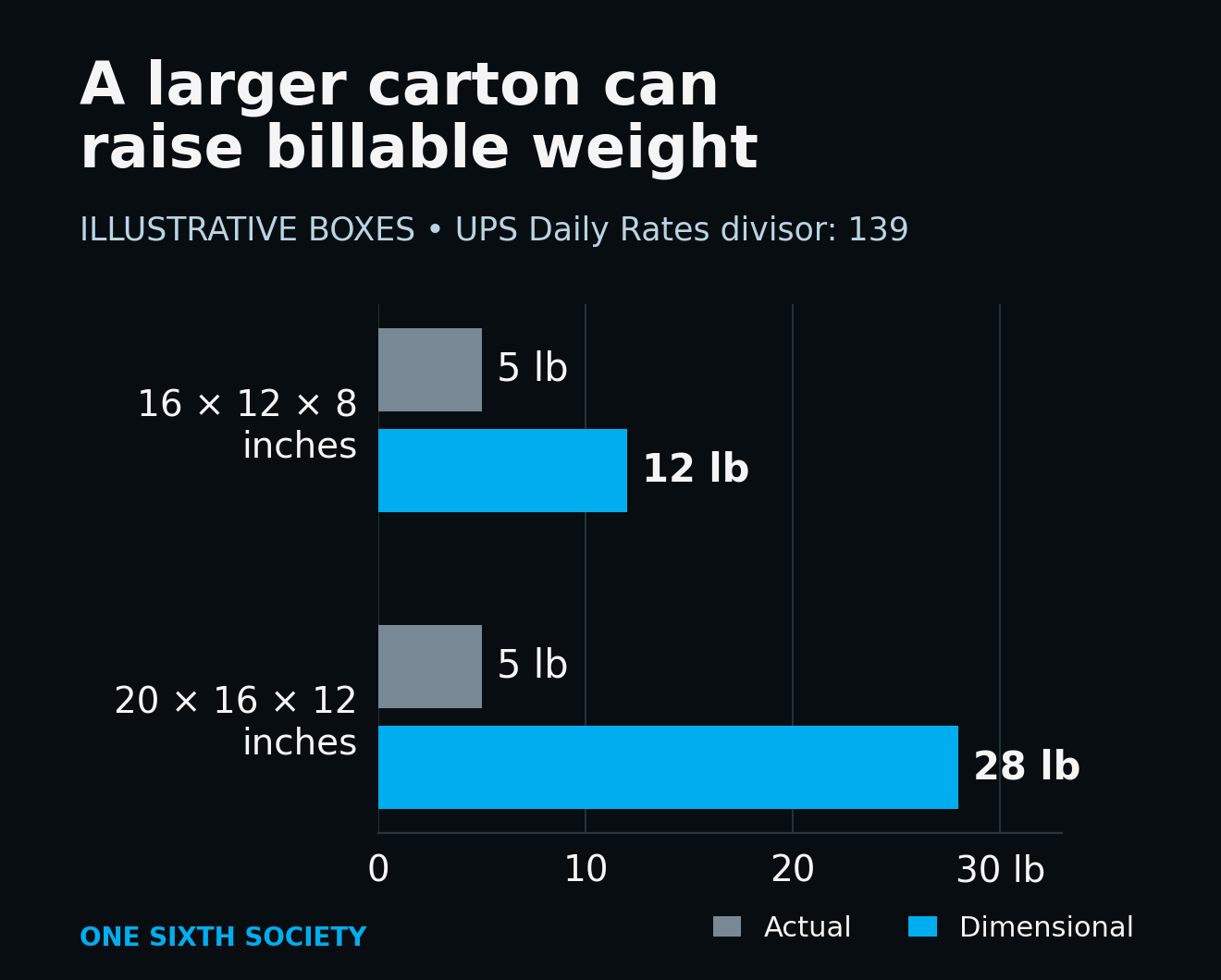
| Illustrative carton | Actual packed weight | Dimensional calculation | Rounded dimensional weight |
|---|---|---|---|
| 16 × 12 × 8 inches | 5 pounds | 1,536 ÷ 139 = 11.05 | 12 pounds |
| 20 × 16 × 12 inches | 5 pounds | 3,840 ÷ 139 = 27.63 | 28 pounds |
UPS' Daily Rates guide, page 19 uses the greater of actual and dimensional weight as billable weight. That does not mean the delivery price rises in exactly the same proportion. Service, destination, rate agreement and other charges still matter. It does explain why comparing only the weight of the figure misses part of the shipping calculation.
Before importing a large Hot Toys release, get a packed shipping quote for the exact edition. Do the same before selling one. A price agreed before measuring the carton can leave either party with an unpleasant surprise.
US Tariffs and Import Charges: Check the Entry Rules, Not Old Forum Advice
Tariffs are duties on imported goods. A tariff percentage is not automatically the same percentage increase on a Hot Toys retail listing. The applicable classification, origin, customs value, entry date and any exemption must be considered. The customs value also should not be assumed to equal the final tax-inclusive shop price.
As checked on September 15, 2026, CBP's July 23 guidance introduced additional Section 301 duties effective July 24. It lists a 12.5% rate for covered goods originating in China and Hong Kong, subject to specified exemptions, and explains that other applicable duties remain relevant. That is one layer of the rules, not a verified all-in tariff rate for every Hot Toys figure. CBP's July 2026 operational guidance.
The small-parcel assumption has changed too. CBP's June 2026 rule addresses the continued suspension of the duty-free de minimis treatment. Collectors should not rely on the old blanket claim that an overseas order below $800 USD enters duty free. CBP's published June 2026 rule.
These rules can change after an article is written. For an actual order, ask the seller or carrier to identify the charges being collected and whether any remain payable on arrival. A country listed as the seller's address does not, by itself, establish the goods' manufacturing origin or their customs treatment.
Keep These Charges Separate
| Charge | What it pays for | What to confirm before ordering |
|---|---|---|
| Figure price | The item sold by the retailer | Exact edition, condition and included accessories |
| International delivery | Transport under the selected service | Packed carton, tracking and what the quote includes |
| Import duty | A government charge under the applicable import rules | Whether included or collected separately |
| Clearance or carrier fee | A service charge for handling the import or advancing charges | The carrier's fee schedule and the seller's arrangement |
| Sales tax | Tax applicable to the sale | The checkout total for your location |
| Currency or payment fee | Conversion or payment-related charges | Your card or payment provider's terms |
Do not count a charge twice. If a seller has included import duties in the amount you pay, adding another guessed tariff to the comparison makes that seller look more expensive than the actual offer. Conversely, a low item price with delivery and clearance left out is not the final cost.
What Would an Additional Import Charge Do to the Total?
Suppose a purchase costs $350 USD before an additional charge being compared. If that charge is $25, the total becomes $375; if it is $50, the total becomes $400; if it is $100, the total becomes $450. These amounts are a sensitivity example, not current duty quotations or a calculation of a Hot Toys customs entry.
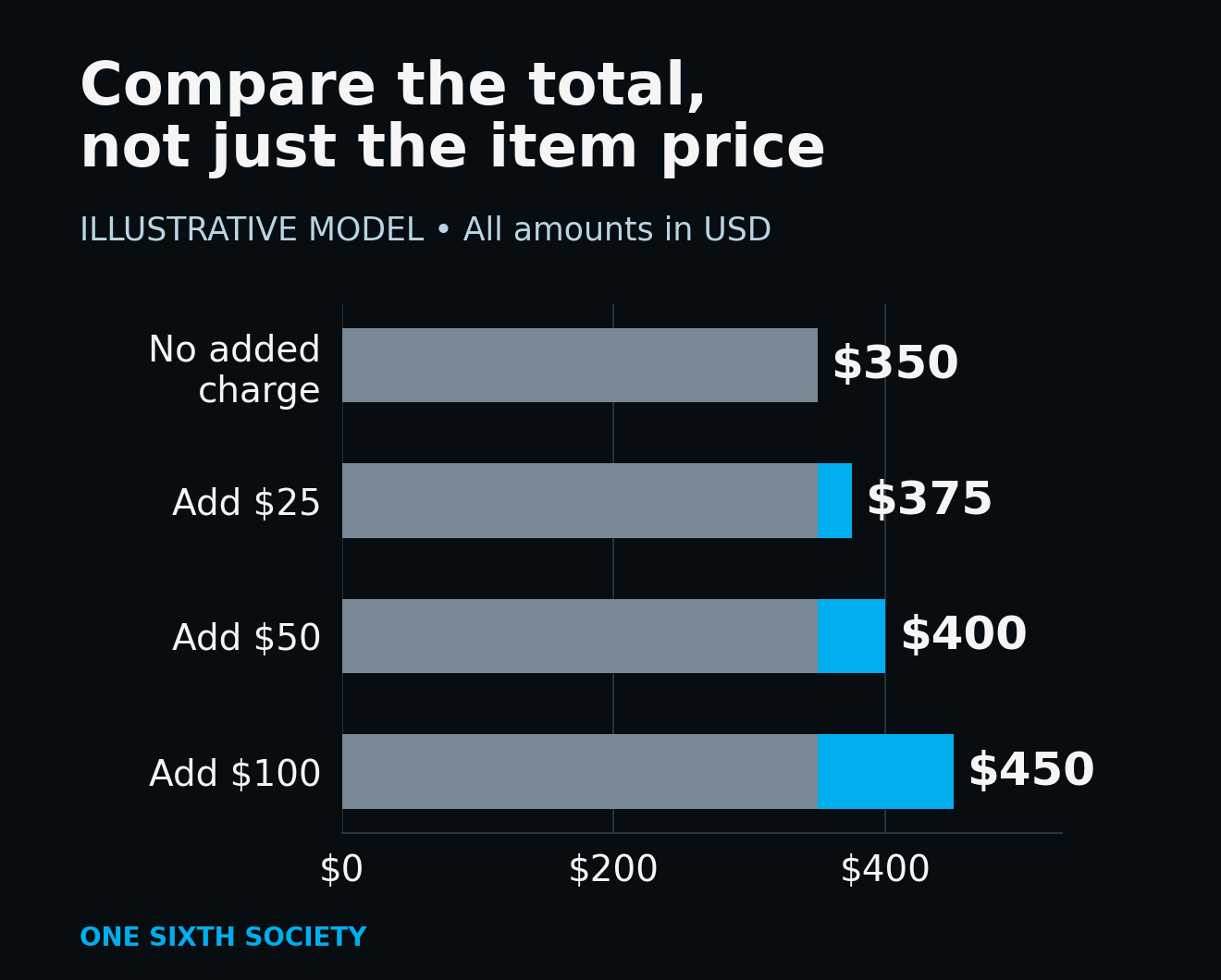
This is the number worth comparing with a domestic offer: the final amount for the same figure and service. No public figure-specific invoice means we cannot honestly declare that tariffs explain every dollar of a Hot Toys price increase. Product changes, shipping, exchange rates, distribution and the seller's pricing decision may also contribute.
Quality, Replacement Parts and the Cost of Keeping a Figure
A well-made collectible should look good after the excitement of opening it has passed. That makes material condition and service relevant to value, even though neither gets as much attention as an announcement photograph.
Hot Toys Japan's support terms require purchase evidence for eligible new products through its authorized distribution and warn that replacement parts are limited. They distinguish initial defects from damage or loss during handling. These are Japanese terms, so read the policy that actually applies to your seller instead of assuming worldwide lifetime parts support.
For an expensive purchase, ask who manages a defect claim, what photographs or receipt are needed, and who pays return shipping. Keep the instructions and organize spare parts by release. A small missing connector can prevent use of a much larger accessory.
Realism and Long-Term Durability Are Different Tests
A fine costume coating, a small moving joint and a realistic hair treatment should not be judged only on how they look on day one. Condition and handling matter, particularly when buying an older release. Inspect for cracks, loose parts, stains, peeling surfaces and previous repairs. Do not infer that every example of a material will fail in the same way or on the same schedule.
The Smithsonian identifies light, physical force, unsuitable temperature and humidity among the causes of collection damage. That supports basic care: avoid direct sun and unsuitable storage conditions, and handle delicate parts carefully. It does not provide a tested lifespan or one ideal humidity setting for every mixed-material Hot Toys figure. Smithsonian collection-care overview.
Use the figure's own instructions for joints, power and assembly. A general tip online is not permission to force an unfamiliar mechanism or apply a chemical treatment to the costume. Preserving the figure you already own is usually more useful than buying accessories to repair avoidable damage later.
Demand and Resale: Why the Price Can Keep Moving
The original retail price and a later resale price answer different questions. Retail pricing relates to selling a newly produced item. An aftermarket price reflects the available supply and what another collector is willing to pay at that time. A higher resale price does not send extra sculpting or painting money back into a figure that has already been made.
A scarce release can attract a premium, but scarcity alone does not establish demand. A new version can change what collectors want from an older one. Condition, completeness and the exact edition complicate the comparison further. There is no reliable rule that every Hot Toys figure appreciates.
When checking an asking price, separate the product from the story around it. “Rare,” “grail” and “sold out” are descriptions a seller may use; they are not completed transactions. Ask what comparable examples actually sold for, how recently and with which accessories.
Finding Better Deals on eBay and in Collector Groups
Use the exact figure name and product code when checking sold prices. eBay says its Product Research tool includes actual accepted Best Offer prices and provides filters for condition and other listing details. That is more useful than treating every visible asking price as market value. eBay's Product Research guidance.
A complete displayed figure, a sealed box and a loose figure missing its portrait are different purchases. Compare photos of the actual item, not only the promotional image. Ask about repairs, missing hands, accessory trays, odors and material condition. A discount can disappear quickly if you have to hunt down an important missing part.
Buy, sell and trade groups can offer good opportunities when another collector changes focus. Ask for current photographs identifying the seller and the item, check the transaction history available to you and agree on the exact contents, condition, packing and total before paying. Those checks reduce uncertainty; they do not guarantee that a stranger will deliver.
Use a payment method whose purchase protection covers the transaction. PayPal's US protection terms exclude personal payments, including Friends and Family. A lower price for paying that way is not equivalent to a protected purchase. PayPal's purchase-protection terms.
What Is Worth Paying More For?
For a portrait-led figure, put likeness and the shipped paint finish first. For an armored character, look at the proportions, fit of the panels and useful movement. For a fabric-heavy release, study the tailoring in normal poses. For a Deluxe package, decide whether its extra display options will be part of your collection or remain boxed.
| Your collecting priority | Pay attention to | Do not mistake this for proof of quality |
|---|---|---|
| Actor likeness | Face shape, expression and ordinary photos of the shipped head | Pores alone or one dramatic promotional angle |
| Posing | Usable movement with the finished outfit and stand | A high articulation count by itself |
| Costume accuracy | Fit, layering, color and recognizable details | Expensive-sounding material names |
| Display extras | The exact accessories and space you will use | A larger accessory count or bigger carton |
| Long-term ownership | Condition, care instructions and applicable support | A premium price or an unopened older box |
| Value | The complete purchase cost for the edition you want | A discount calculated from an unrealistic asking price |
You can appreciate the work and still pass on a release. Understanding the development, packaging and supply chain should help you ask better questions, not make you feel obliged to defend every price. The best purchase is a figure whose actual qualities matter to you, bought on terms you understand.
Our Hot Toys Preorders let you compare the stated contents and display options of individual releases. Use those details to choose the version you want before deciding whether the price makes sense.
Interviews, Video and Research Notes
For a closer look at the artists, Hypebeast's 2015 video interview with J.C. Hong, Kojun and Yulli accompanies the written interview cited above. The Story's archival Hot Toys interview with J.C. Hong is another behind-the-scenes resource. The artists' comments cited in this article come from the accompanying written interviews. These older videos offer additional background on the people behind the figures.
Research checked September 15, 2026. Manufacturer descriptions establish advertised features; they do not replace independent inspection of a shipped figure. The article's original charts use either identified published prices or explicitly stated arithmetic examples. We have not estimated Hot Toys' private actor fees, license percentages, labor hours, factory profit or dealer discounts. Those remain undisclosed in the sources reviewed.