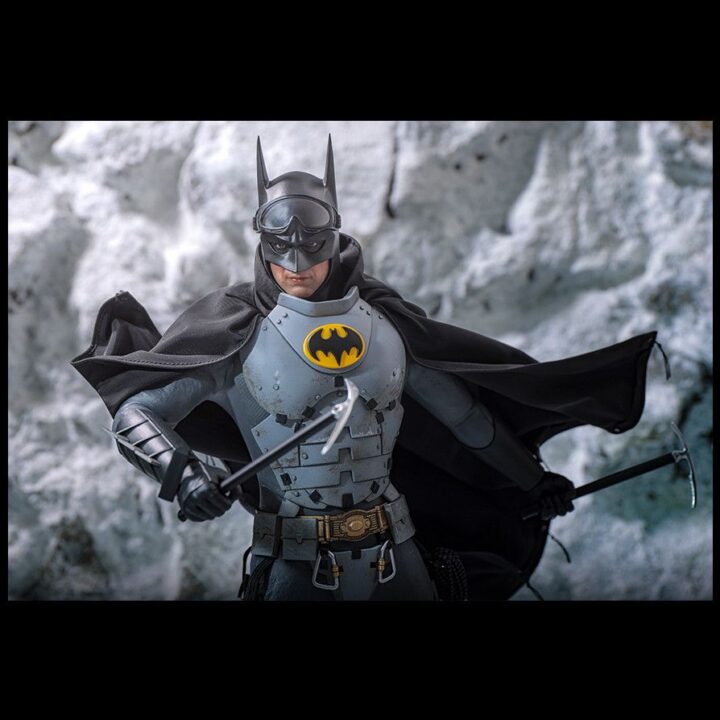

Cleaning a sixth scale figure starts with identifying what you are touching. A painted face, cloth coat, rooted hairstyle and glass shelf need different treatment. For ordinary loose dust, begin gently and use as little handling as possible; a stubborn mark calls for the maker’s guidance, not progressively harder scrubbing.
A soft brush handles loose dust around small details. A clean microfiber cloth suits accessible surfaces that will not snag. Keep household glass cleaner for the empty cabinet, away from the figures.
Start with a clean, soft brush
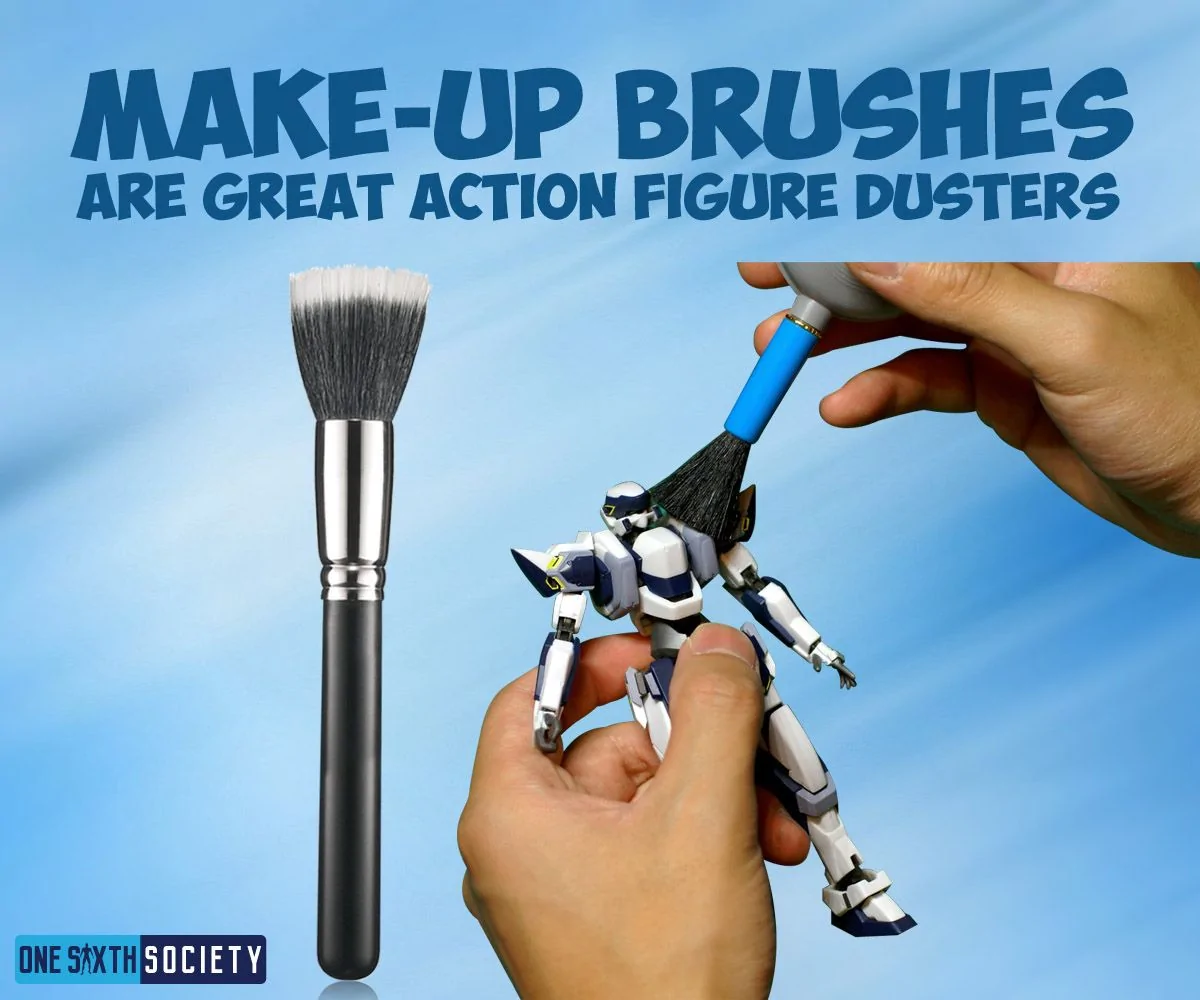
Use a dedicated brush that has never held makeup, paint or cleaning chemicals. Support the figure securely and work gently around thin accessories, raised details and edges. Remove only parts designed to detach, and set them in a tray where they cannot roll away.
Sideshow’s published collectible-care guidance recommends a clean microfiber cloth or soft detail brush for dust. A brush is useful around small details, while a cloth suits accessible surfaces where it will not snag. Stop if paint lifts, a finish feels sticky or a material starts to flake.
Treat fabric and hair separately
Cloth outfits can hold lint and pet hair, but vigorous brushing can catch stitching or trim. Follow the figure’s care instructions and avoid pulling loose threads. An adhesive lint roller is not automatically suitable for delicate fabrics, printed details or imitation leather.
Keep a cleaning brush away from a styled hairline unless the maker recommends using it there. Rooted hair may need a specific styling method, and paint or adhesives beneath it can be sensitive. Our sculpted versus rooted hair guide explains the ownership differences.
Clean the empty display surface

Move the figures to a secure, padded area before cleaning the shelf or glass around them. Apply a cabinet-appropriate cleaner to a cloth away from the figures so spray cannot settle on costumes or faces. Let the surface dry fully before returning the collection.
The original weather-stripping illustration shows one approach to reducing dust through door gaps. Whether it suits your cabinet depends on the door clearance, hinges and finish. Check fit before applying adhesive, and do not force glass against an oversized strip. An enclosed case can reduce dust entry, but it still needs inspection and cleaning.
Use caution with canned air and household dusters

A forceful air jet can disturb small parts or hair, and an incorrectly used compressed-gas can may discharge liquid. Household dusters can catch on fragile details.
Prefer the gentle brush-and-cloth approach for routine dust. If the manufacturer specifically recommends a canned product, follow both its directions and the figure’s instructions, including orientation and distance. Keep household surface-cleaning products away from painted figures and fabric outfits.
What a collectible care kit includes

The price printed in this original illustration belongs to the earlier article; it is not a current offer.
The care kit shown contains a brush, microfiber cloth, lint roller, tweezers and scissors. The brush and cloth are the starting points for dust; the other tools have narrower uses. Do not cut a thread or pull a costume detail unless you know how it is attached.
Prevent avoidable buildup and damage
Sideshow also advises keeping collectibles away from direct sunlight, heat sources and air-conditioning or heating vents, in a controlled indoor environment. Inspect your own display regularly and clean when dust begins to accumulate rather than relying on one schedule for every room.
For display planning, see our display cases guide. Our figure box storage guide explains why fitted packaging can be useful when the collection needs to move.
For battery-powered features, read our battery-leak prevention and storage guide. Cleaning ordinary surface dust and handling battery residue require different precautions.