Originally published June 14, 2017. This article preserves One Sixth Society’s original reporting and images; product availability, pricing, and opinions reflect the original publication period.
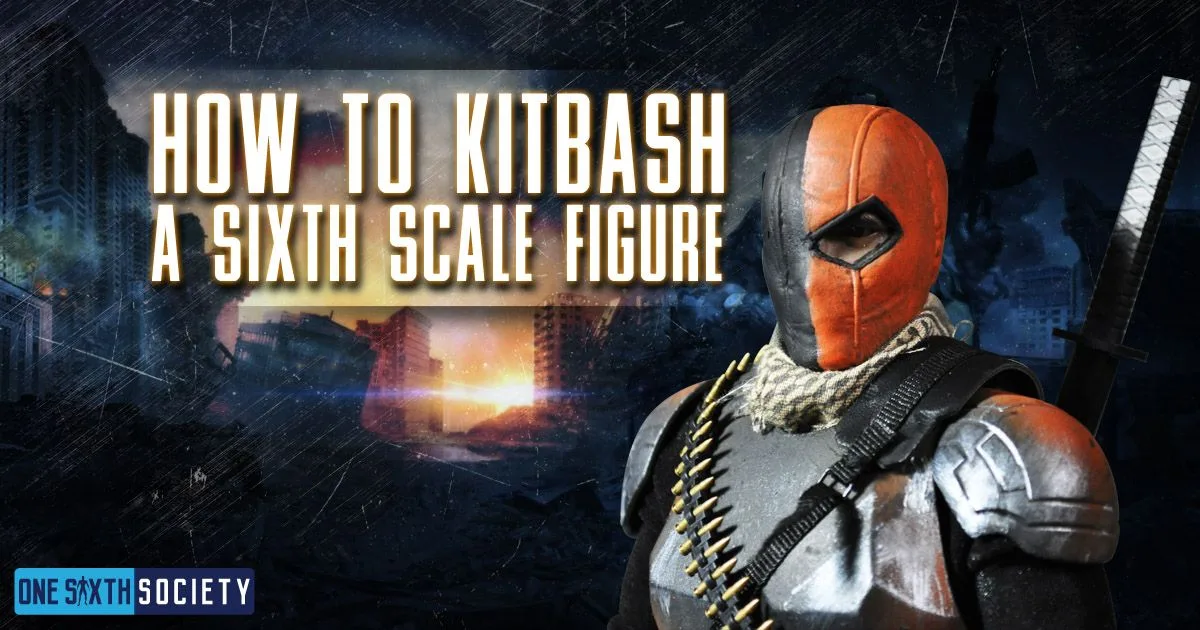
All the parts in this project came from other mass-produced figures; none are recasts. When the character you want has not been made, kitbashing lets you assemble your own version from existing bodies, clothes and accessories. Here is how I built my Deathstroke.
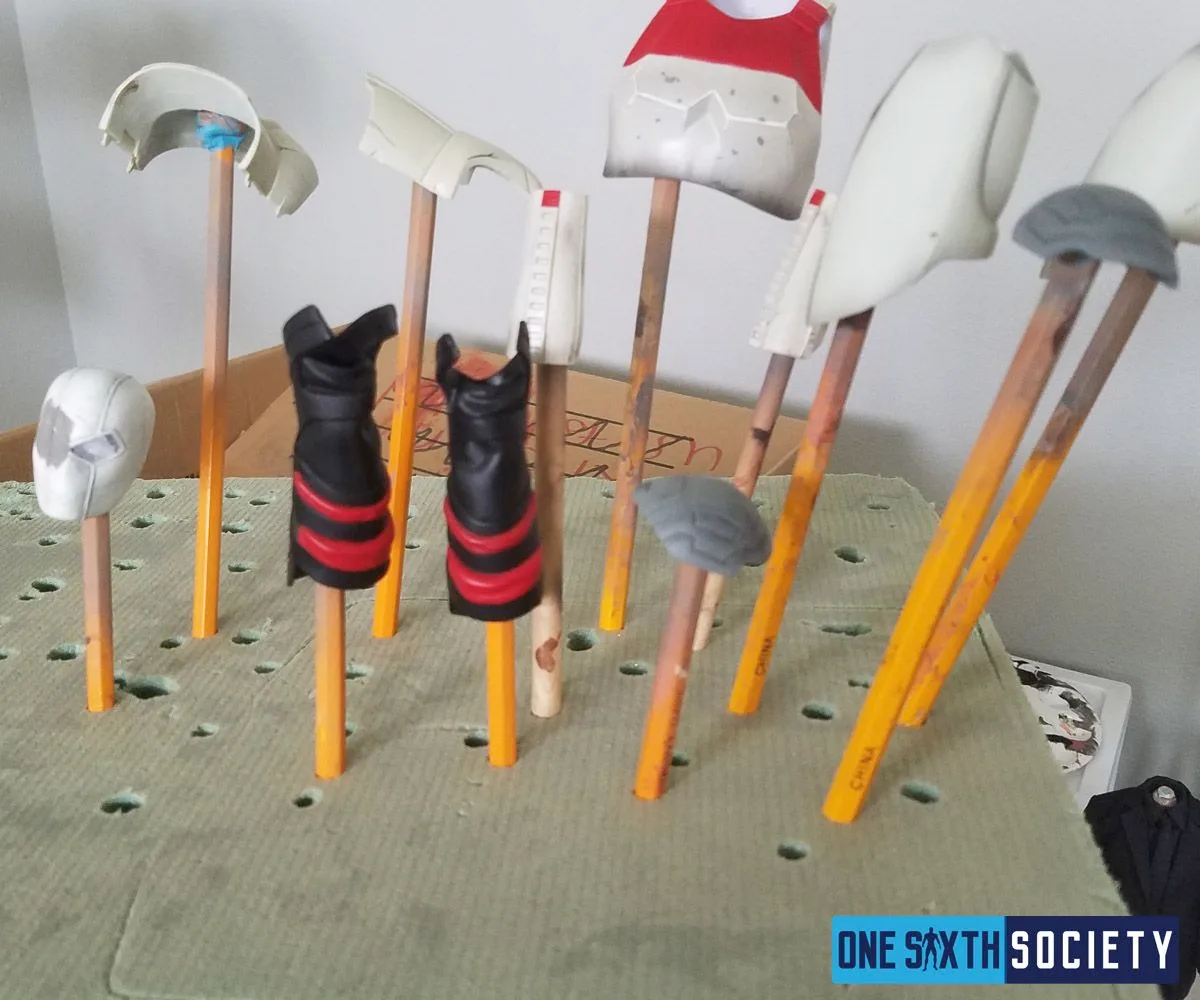
To get started we have to touch on what kitbashing really is. Now, I have seen people discussing this in several places before so this will just be my interpretation of the terminology. To me, kitbashing is where you use or repurpose parts from several different sources in order to create a figure. Ready-made character kits can be a “kitbash in a box,” but for me, much of the fun comes from choosing the parts and assembling them myself.
Parts can come from collector sales, eBay or specialist sixth-scale parts stores. For this 2017 project, I chose one of my favorite comic-book characters, Deathstroke, before an official sixth-scale release was available.
Assembling the Figure
First off, I needed to find plenty of references for what I wanted to create. I decided to go for a hybrid of his New 52 appearance and his look in the Arrow television series. For this I would need chest, arm, and leg armor as well as a headsculpt and various belts. I ended up deciding on a mixture of Hot Toys, Sideshow, and Medicom parts to round out the armor. I used readily available Star Wars trooper armor alongside Batman shoulder armor and Thor lower-leg armor.
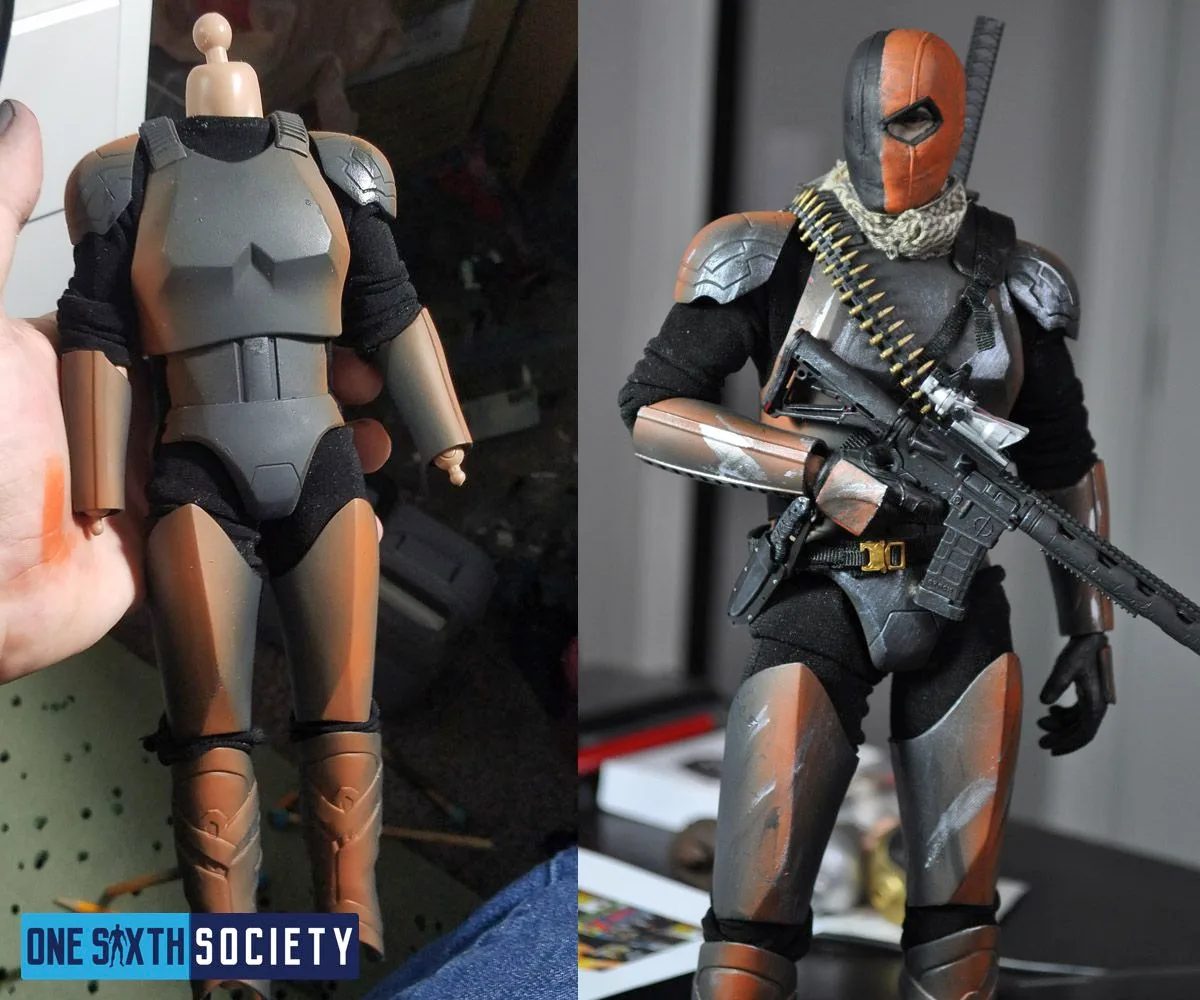
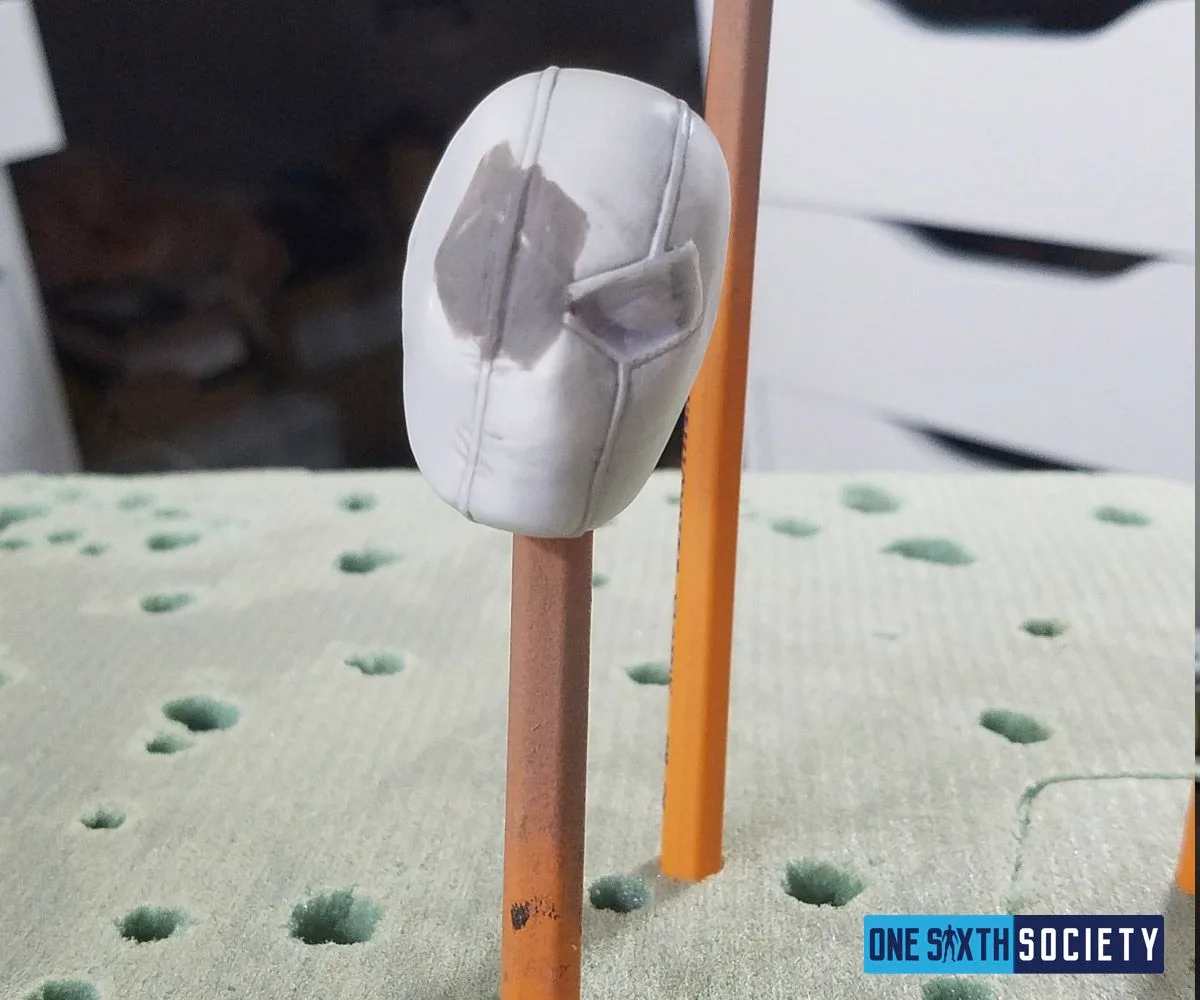
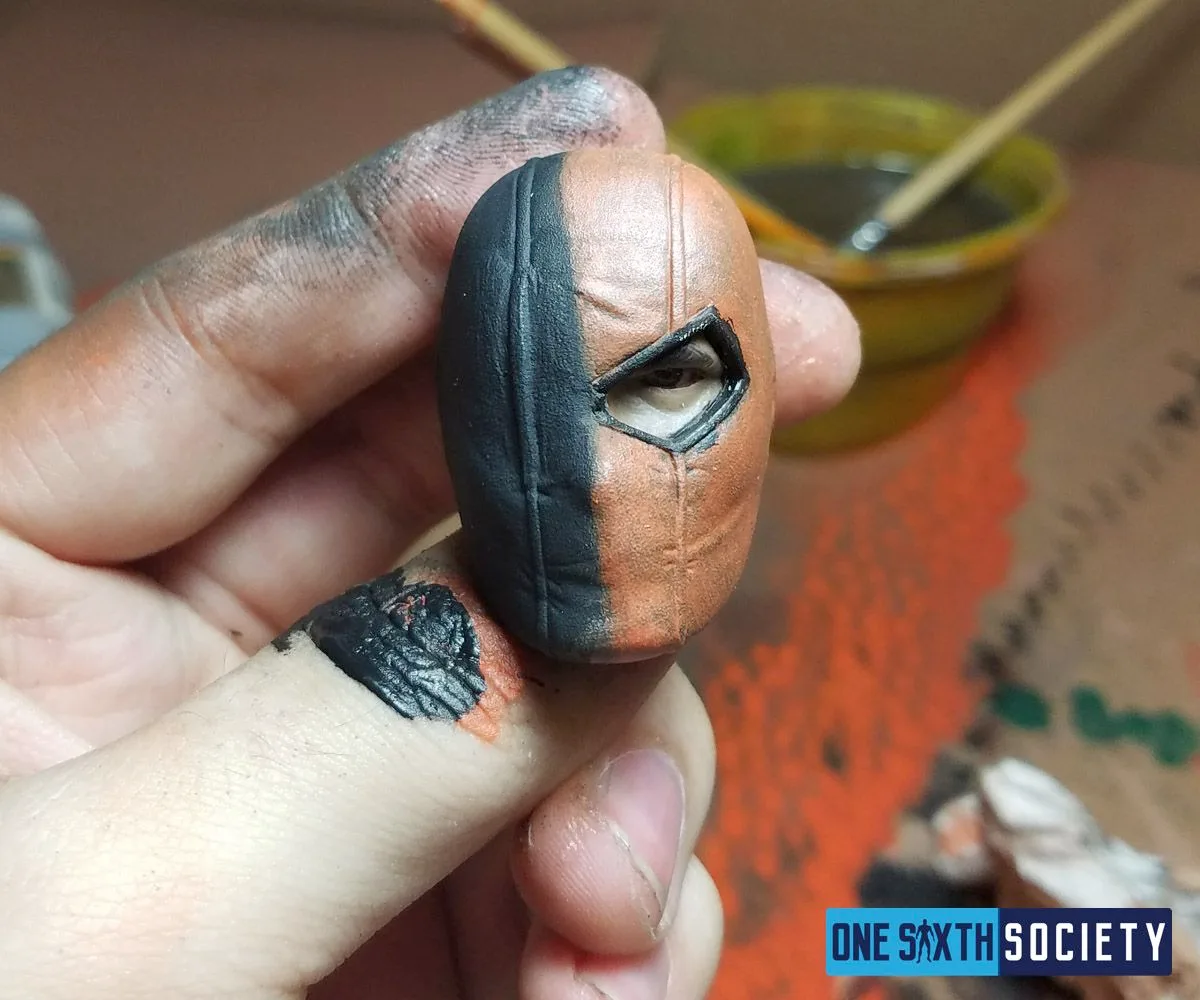
The undersuit was a Darth Maul spandex suit fitted over a DAM Toys narrow shoulder body. The most important part of Slade is of course his mask. I could not find a head readily available that would work in its original form, so I decided to try my hand at modifying a Sideshow Storm Shadow head sculpt. Obviously I am not the most talented, but I am pleased with how the headsculpt came out.
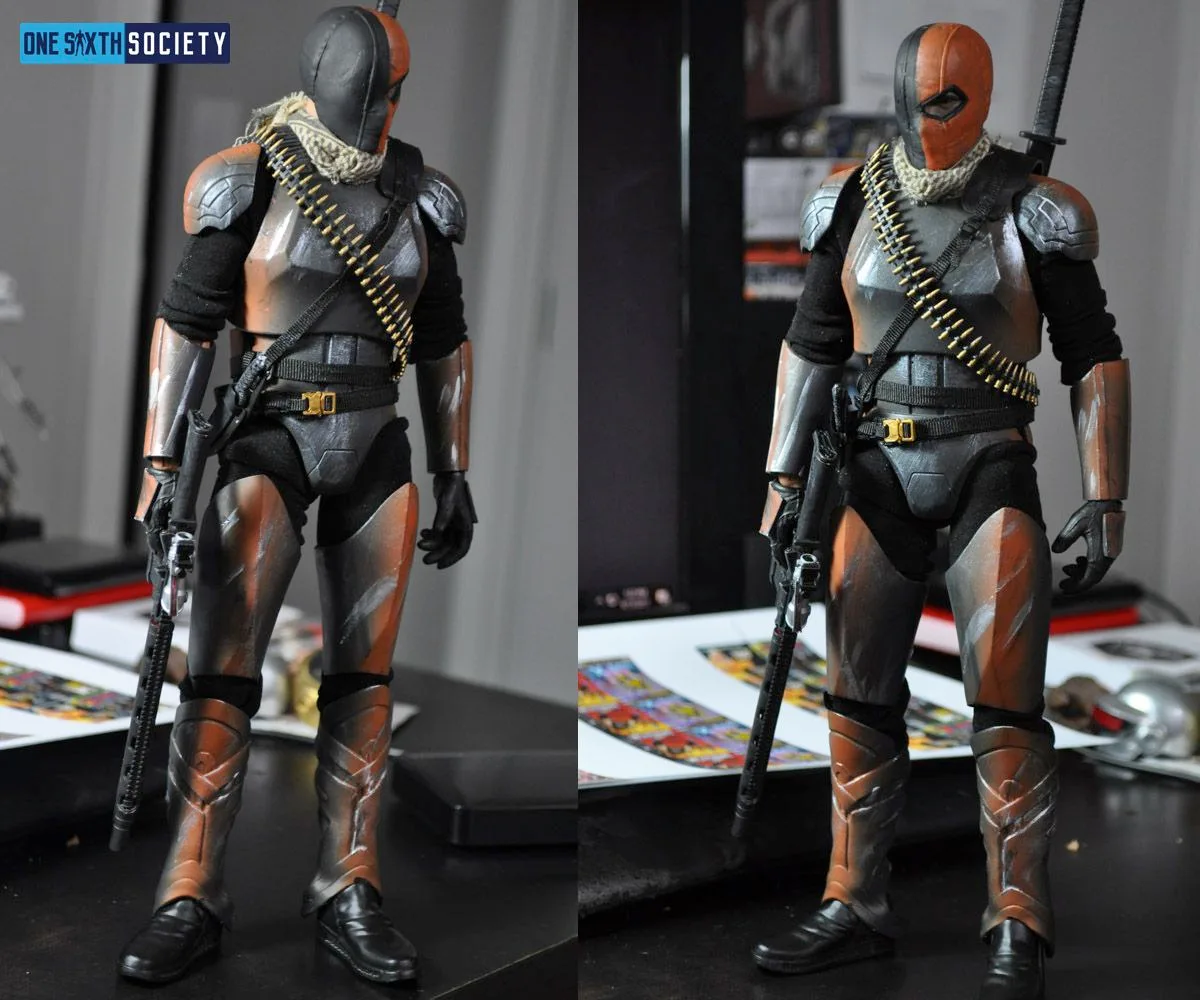
Once all of my parts were bought, it was time to assemble them for painting. I first applied a gray primer coat, followed by flat black. Next I airbrushed orange highlights and hand-painted the orange on the mask. Finally I went in and dry-brushed silver highlights and painted some ‘Battle Damage’ onto the armor. The next touches were the rifle and gloves, which I also painted by hand. Finally, I took the assortment of belts I had purchased and began to attach them. Personally I hate dealing with small buckles and loops, so I normally glue belts shut. Once it was all assembled, I went in with a small brush to touch up any spots I had missed, and sat back to admire the work.
Investment and Final Thoughts
Deathstroke took about two weeks to create, including the wait for parts, and cost $123.60. I am pleased with the result. While I have been painting for quite a while, I am very much an amateur. I hope that this kitbashing project inspires you to give it a try yourself. It is an immensely rewarding experience to build a figure from the ground up.
Plan your own kitbash before ordering parts
Start with one reference view and a parts list. For a hybrid design like this Deathstroke, decide which version supplies the mask, armor and clothing. That makes it easier to judge whether a tempting spare part belongs in the project.
Record the body model and check shoulder width, neck connections, wrist pegs and ankle joints before ordering. Ask for connector photographs when needed. A sixth-scale label does not guarantee that parts from different bodies fit together.
Dry-fit the unpainted parts over the undersuit before gluing, trimming or painting them. Check the pose and belt length, then photograph the assembly before taking it apart for paint. If a connection needs force, resolve the mismatch first.
Keep a simple cost list for parts, postage and supplies. The original project total above is a 2017 example, not a current budget. Leave room for a replacement part if your first choice does not fit.
If a project needs work beyond assembling stock parts, compare the examples in our custom sixth-scale painter profiles and custom cape makers guide. These are historical showcases; confirm current availability and the exact scope of any commission.